Memorandum
Subject: The lessons from 1775
To: All Readers and Interested Parties
From: Greg Smith, Author
Date: 9 JUN 2026
BACKGROUND:
The seeds of revolution were sown in the years leading up to the war. In 1770, four hundred disgruntled citizens confronted a group of British soldiers in Boston. The unruly crowd yelled insults and pelted the soldiers with snowballs and stones. The soldiers opened fire, killing five people. The event became known as the Boston Massacre and added fuel to the simmering tensions between the colonial citizens and the British crown.
Further unanswered grievances led to incidents between the colonials and the British representatives and soldiers. King George and parliament levied tax after tax on the colonies to pay the costs of defending a far-flung empire and to make up for losses incurred in the French and Indian war (1754 – 1763). The taxes were seen as burdensome by colonists and created great animosity toward British rule. When the king increased the taxes on essential products, especially tea, the protests led to action. On December 16, 1773, members of the Sons of Liberty dressed as Mohawk Indians and boarded three ships in Boston harbor. Three hundred and forty-two cases of tea were dumped into the sea.
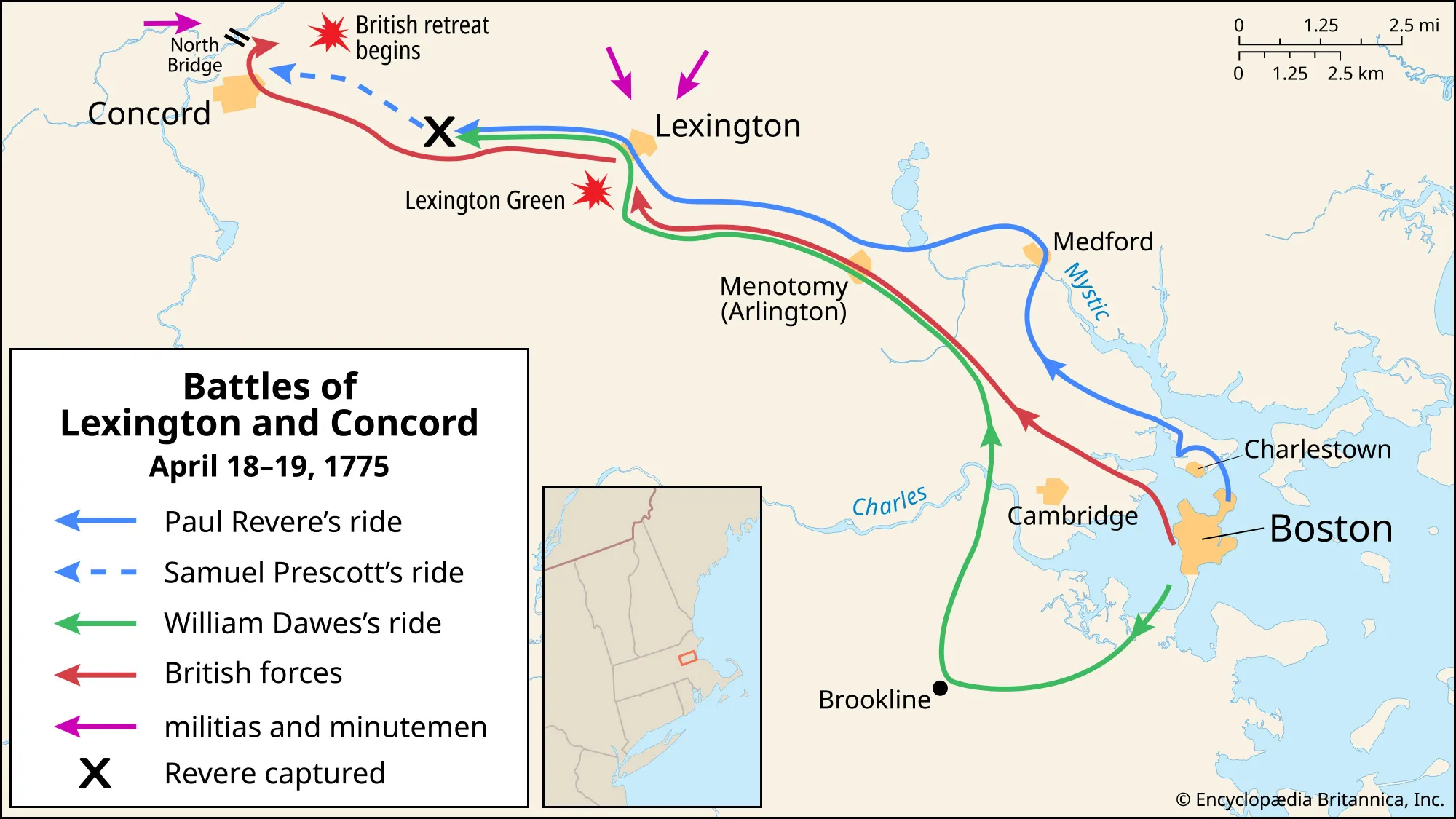
The unrest led King George to order the British army to crush the growing rebellion. In April 1775, eight hundred British troops under General Thomas Gage marched from Boston intending to seize gunpowder reserves stored at Concord. A force of seventy militiamen met the British at Lexington. During their withdrawal, a shot rang out, followed by a volley from the British that killed seven militiamen.
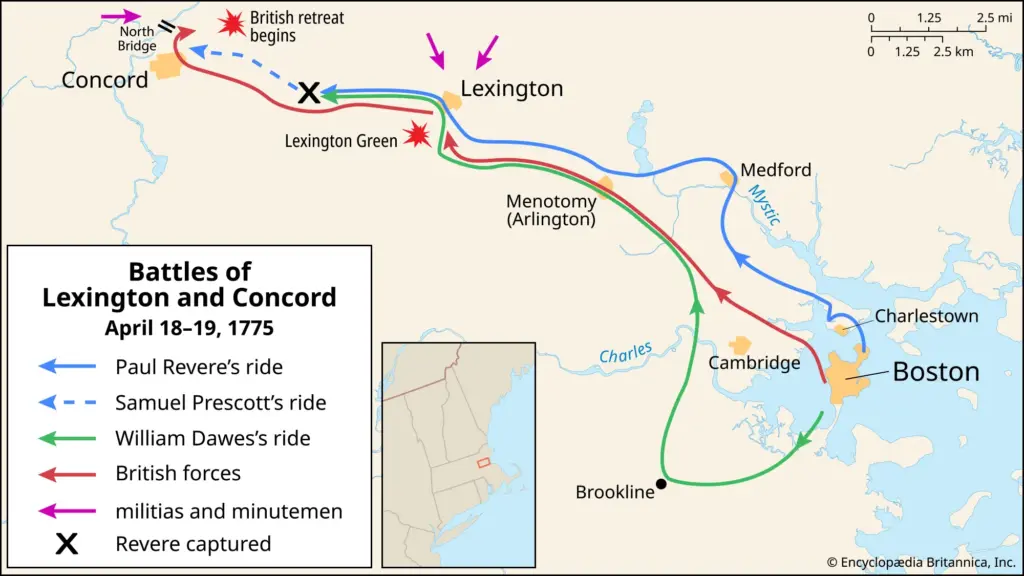
The British continued their march toward Concord and were met by a force of nearly four hundred militia who were convinced that the town was being put to the torch. When the minutemen came within range, the British opened fire, killing two of the leaders, Isaac Davis and Abner Hosmer. Major Buttrick of Concord yelled out; “For God’s sake, fire!” The volley was immortalized in the 1837 poem by Ralph Waldo Emerson, Concord Hymn, as “the shot heard around the world.” The battle of Lexington and Concord signaled the formal start of armed rebellion. Upon withdrawal, the militia harassed the British all the way back to Boston in a running small unit action that foreshadowed the future conflict.
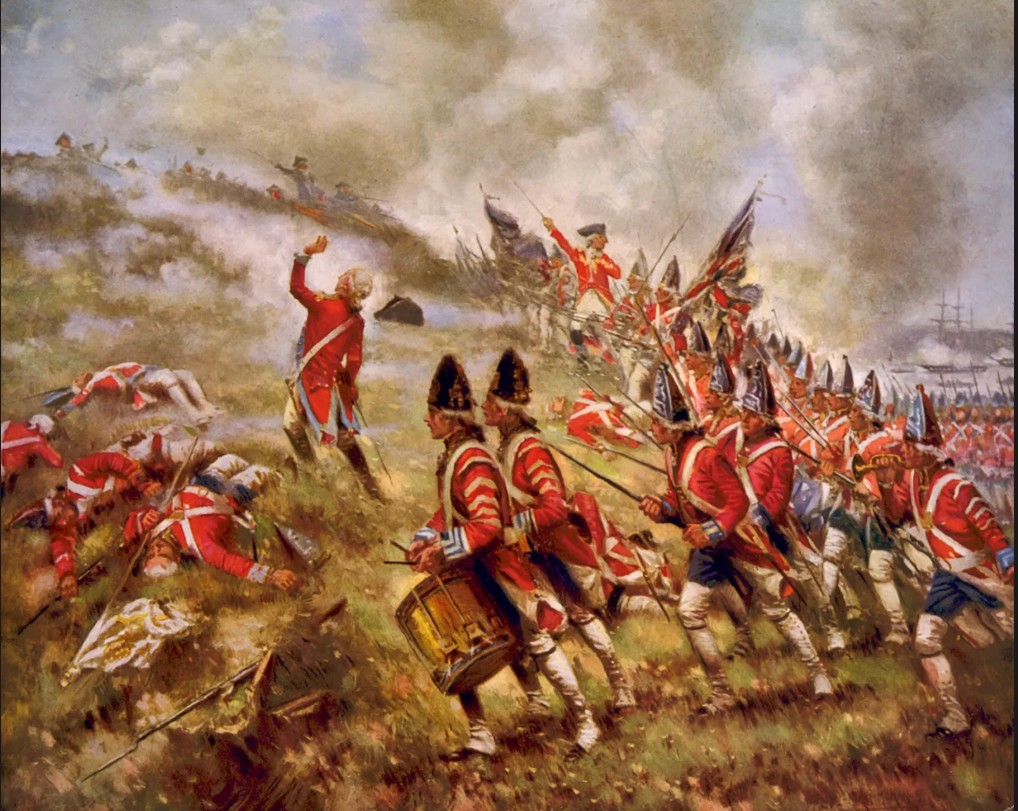
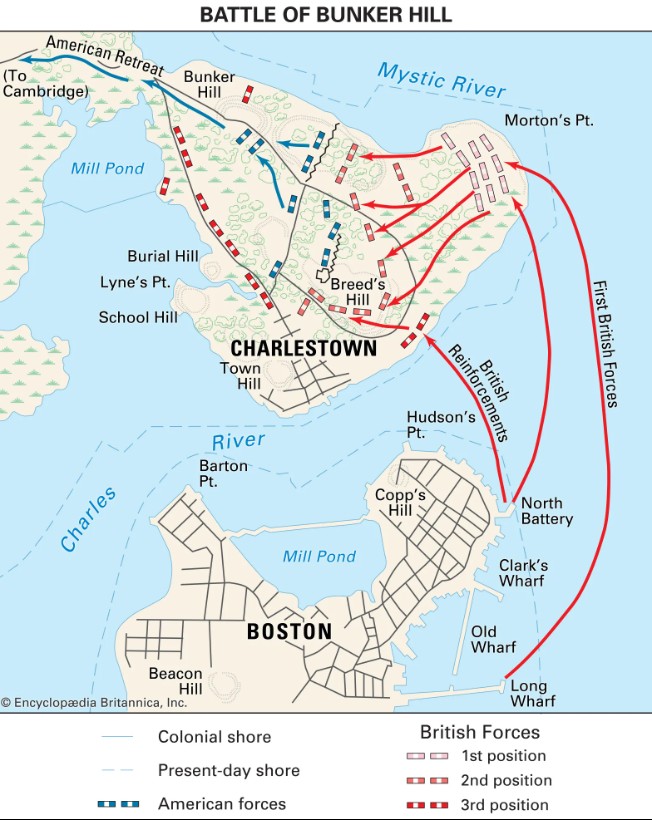
Energized by the battle, thousands of militias converged on Boston. John Adams called for the nationalization of the force. On June 14, 1775, the Continental Army (later the United States Army) was formally authorized. George Washington was named the commanding general the next day. On June 17th, the colonials met the British again at Bunker Hill, outside Boston. Although called the Battle of Bunker Hill, most of the fighting occurred on nearby Breed’s Hill, where the colonial forces erected fortifications that included six-foot-high walls on top of the hill. A British force of twenty-three hundred, supported by cannon of the HMS Lively, attacked the force of approximately twelve hundred colonials in the first major engagement of the war.
The British were able to take the fortification on their third attempt but suffered more than two hundred dead and eight hundred wounded against fewer than one hundred fifty killed and three hundred wounded colonials. The British achieved a pyrrhic victory; the upstart colonials had proven their mettle and resolve. Though the colonials were unaware of their change of status, they had valiantly fought the first battle of the nascent United States Army.
INTELLIGENCE ASSESSMENTS:
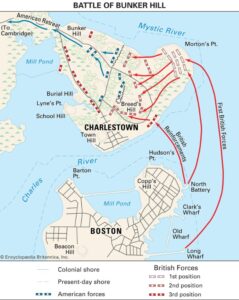
The Battle of Bunker Hill provided several lessons for the Continental Army and George Washington. The main lesson of the battle was that the militiamen and minutemen of the colonies could stand toe-to-toe against the largest, best equipped, and most well-trained army in the world. The lesson was not lost on the colonials or the British, both of whom realized that the struggle would be a long one.
Dedication, fighting spirit, and high morale were evident in the heady early days of the conflict. Washington soon realized, as a former professional soldier himself, that fighting spirit and morale would not be enough in a long war. He very quickly sought to introduce standards, processes and training. He also worked with the Continental Congress to provide supplies and basic equipment like blankets to the army.
Despite improvements and enhanced training to meld the disparate militias into a fighting force, Washington suffered defeat after defeat. Soldiers at the end of their enlistment periods left the army in droves. In desperation, Washington sent his forces across the Delaware River on Christmas Eve of 1776 to attack Trenton, New Jersey. The surprise attack demonstrated Washington’s tactical expertise and proved to the world that the colonists could defeat the British. The victory led to increased enlistments and soaring morale amongst both soldiers and citizens. Still, victories remained elusive.
Eventually, in 1777, Washington obtained professional help to train his army. The army moved to a winter encampment at Valley Forge, Pennsylvania, where a former Prussian officer, Baron von Stueben, drilled the men in tactics and instilled a discipline that had been lacking. When they finally left their snowy, frozen winter quarters, the Colonial Army was a trained, skilled fighting force capable of meeting the British on equal terms.
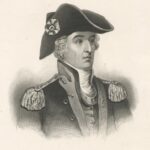
However, the Continental Army was not the only armed force actively opposing the British. Across the colonies, especially in the south, small bands of militia, partisans, and Native American allies waged guerilla campaigns. These highly mobile, independent groups were known for striking fast and disappearing. Hit and run tactics by leaders such as Daniel Morgan, Francis Marion and Nathaniel Greene disrupted British supply lines, sabotaged equipment, ambushed enemy columns. The raiders would hit hard and then then disappear into the surrounding terrain and civilian world. These groups are the inspiration for many of the various special operations forces in the United States military.
Once victory was assured, the guerilla and irregular forces disbanded, returning to civilian life. Since the revolution, the US Army has created, disbanded, recreated, and formalized numerous special operations forces. It was not until World War II that the military began to realize the value of small, highly trained units designed for specific tasks. Units like Darby’s Rangers, Merrill’s Marauders, the First Special Service Force, the Alamo Scouts, Marine Raiders, and Navy Underwater Demolition Teams were crucial to both reconnaissance and eventual victory in far-flung battlefields. Still, by the end of the war, most of these groups were disbanded, reduced to minimal levels, or curtailed in favor of the traditional army.
Traditional armies are not trained to oppose insurgencies and guerilla forces. Every large formation requires lengthy and complex supply lines. Units are burdened by the need for constant upkeep, maintenance, and high support requirements. During periods of drawdowns or cost reductions, the traditional forces dominate the budgets due to massive maintenance and upkeep requirements. Traditional formations also drive weapons and equipment spending in multiple congressional districts and create jobs, so defense authorization requests are dominated by these programs.
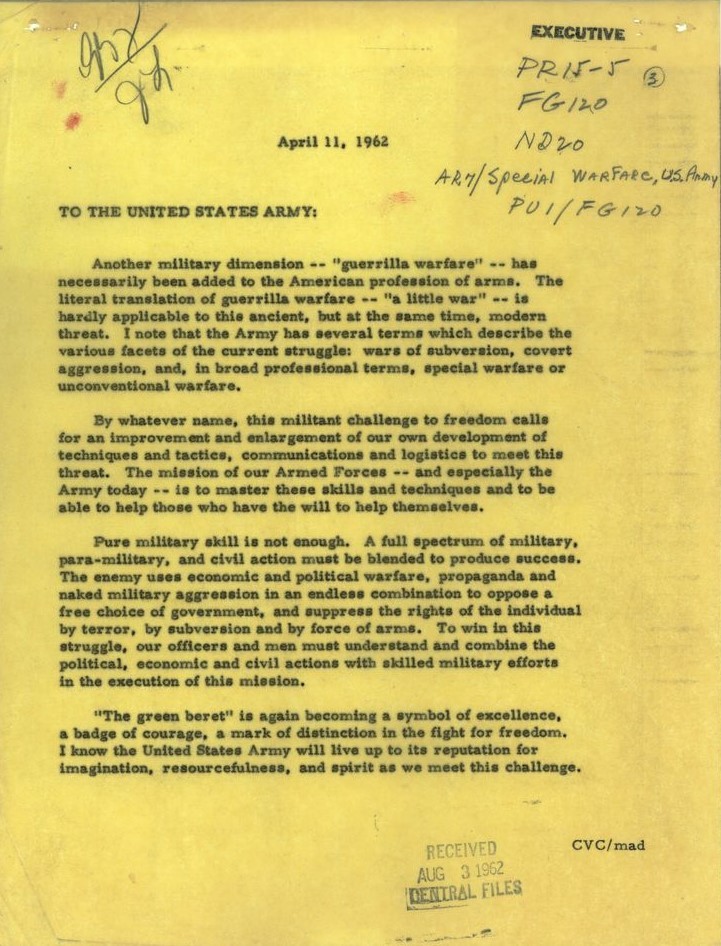
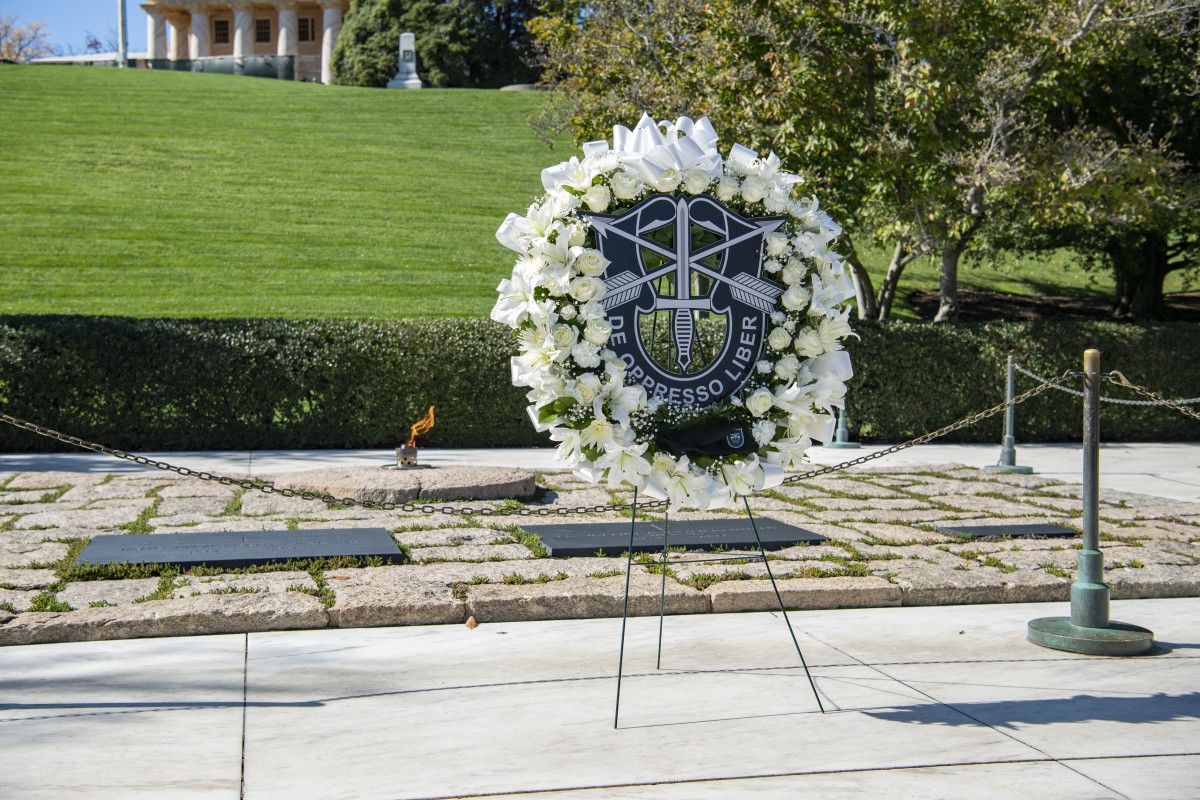
Special mission units and elite formations are often overlooked in defense authorization cycles. Officers indoctrinated into traditional forces like armor, aviation, and artillery have historically occupied the highest levels of decision making. Even the Army Special Forces (Green Berets) were saved only through the direct intervention of President John Kennedy in 1962. The US should have carried forward the lessons from 1775 but has continually had to relearn them. Reductions and cutbacks to elite formations and small units are always easy as they do not affect larger programs, but the cuts result in casualties in future conflicts.
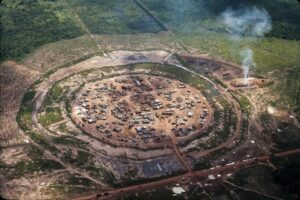
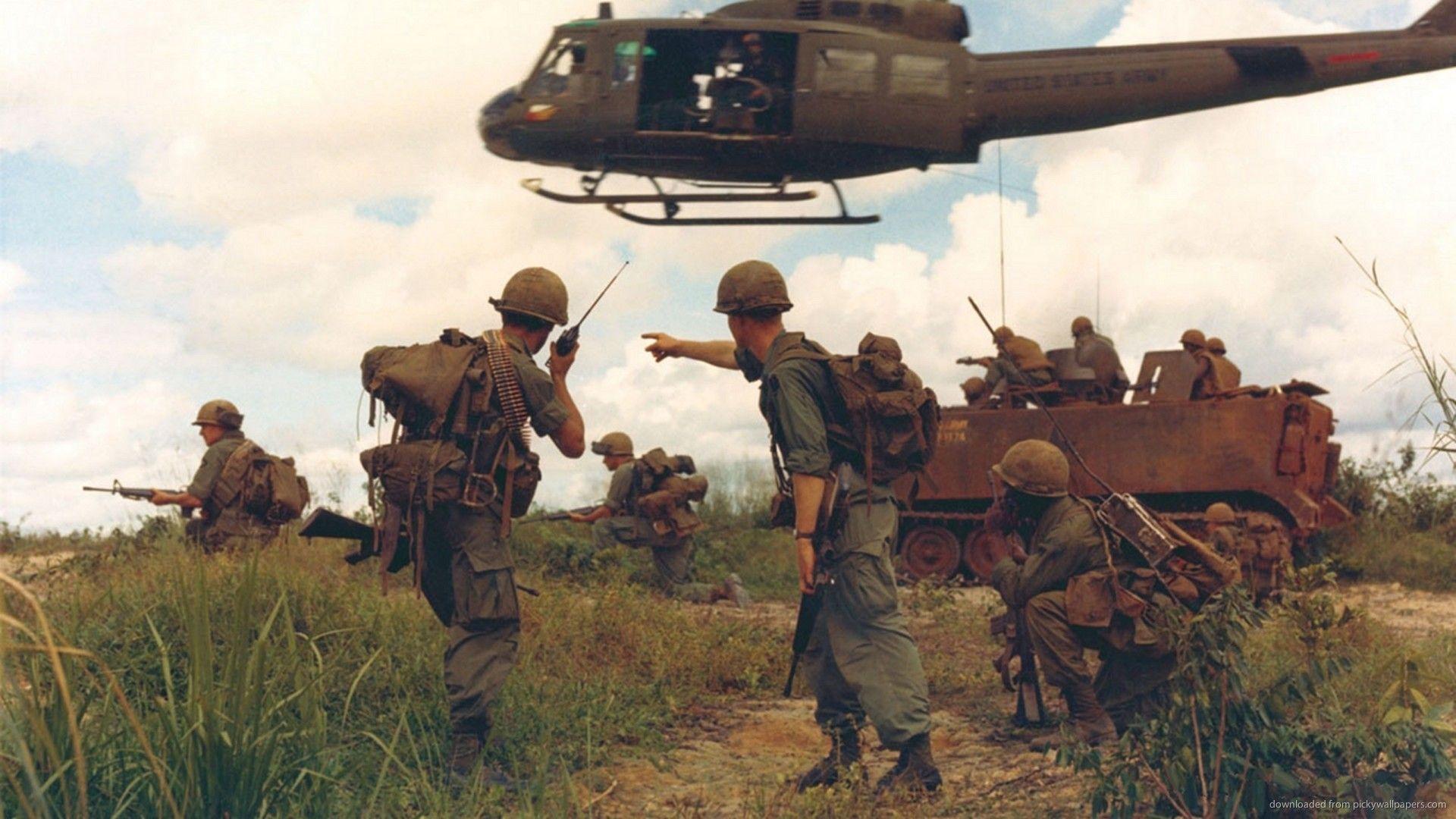
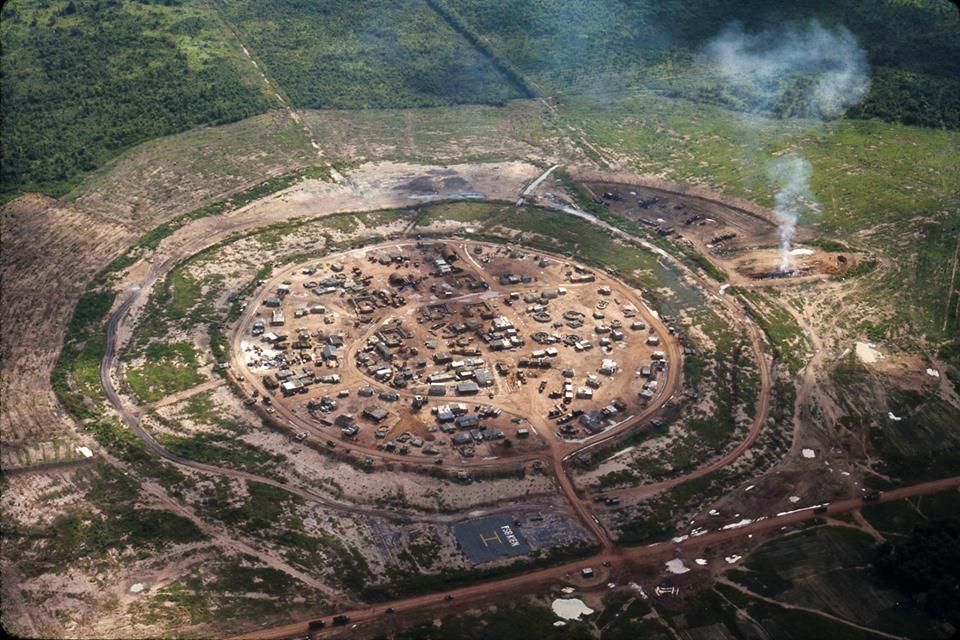
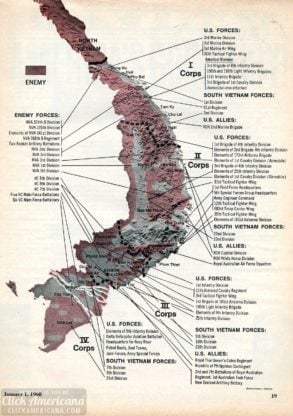
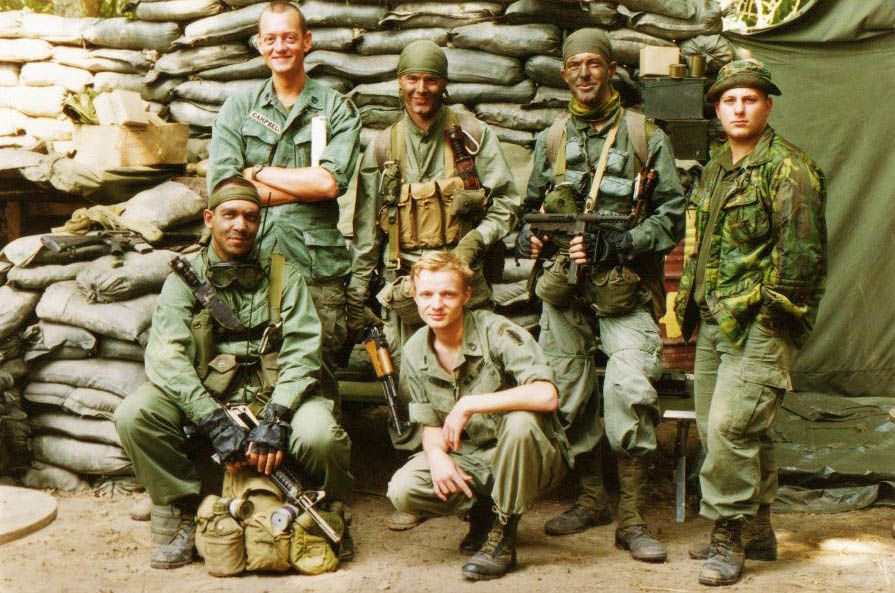
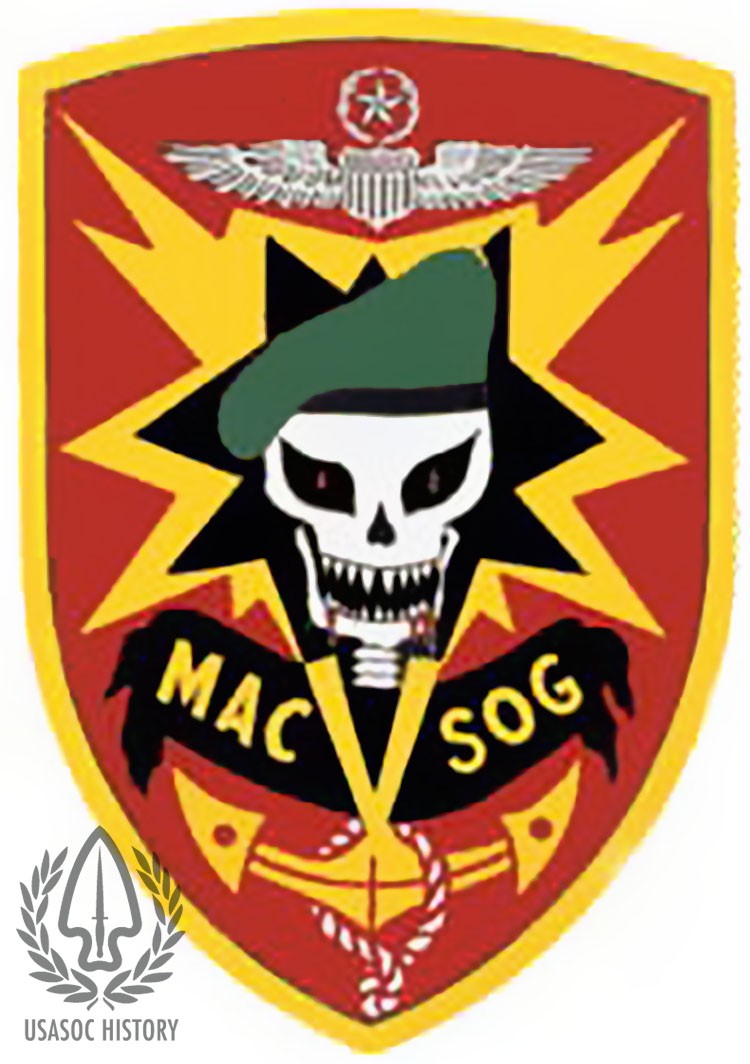
In Vietnam, the US military was forced to fight against a largely guerilla force. The Viet Cong used ambush tactics, sabotage, and espionage to harass the US forces. Even the North Vietnamese Army (NVA), though a formal force, used subterfuge, ambush tactics, and a network of underground tunnels to wage offensives throughout the country. The US was largely tied to fixed bases and restrained by political pressures throughout the war. The military created special mission units like the Military Assistance Command – Vietnam, Studies and Observations Group (MACV SOG) to fight the enemy using similar guerilla tactics. Other counter-insurgency forces, like the Army Special Forces, integrated with the local community to generate popular support for the war. These efforts were highly successful in pockets, but the money, support, and main effort remained with traditional forces.
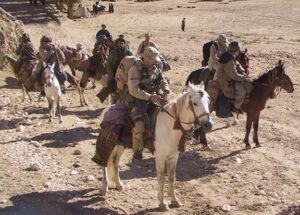
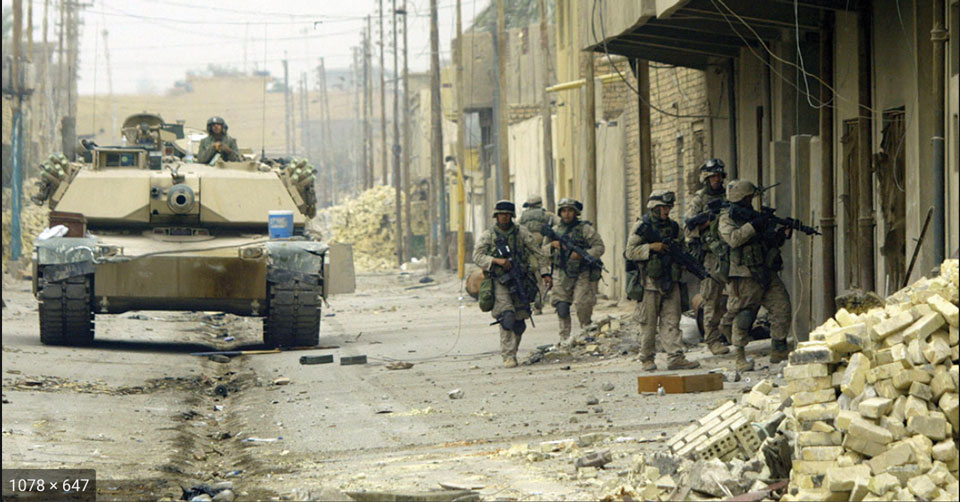
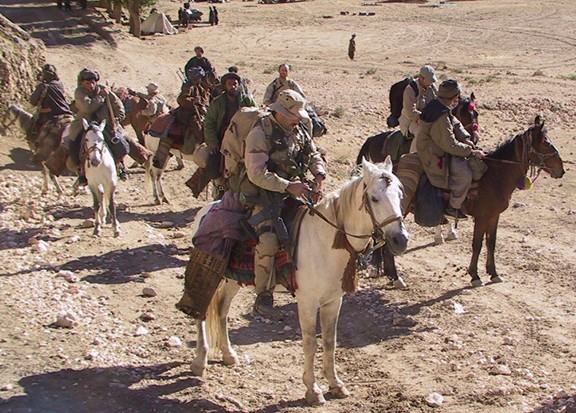
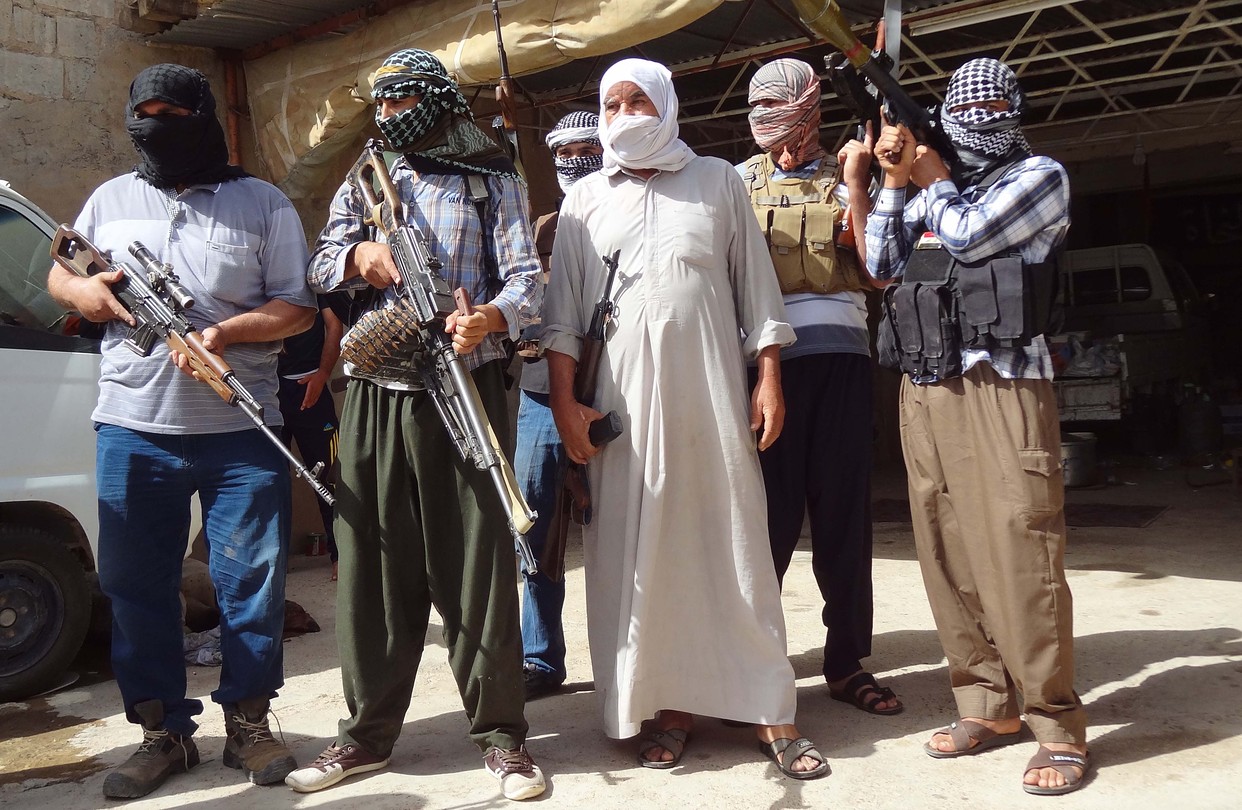
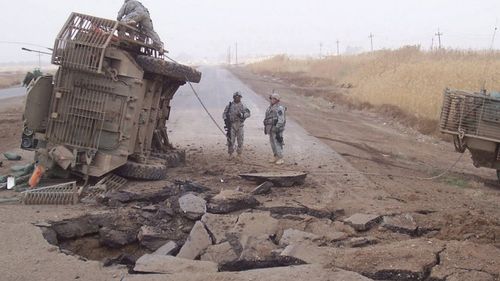
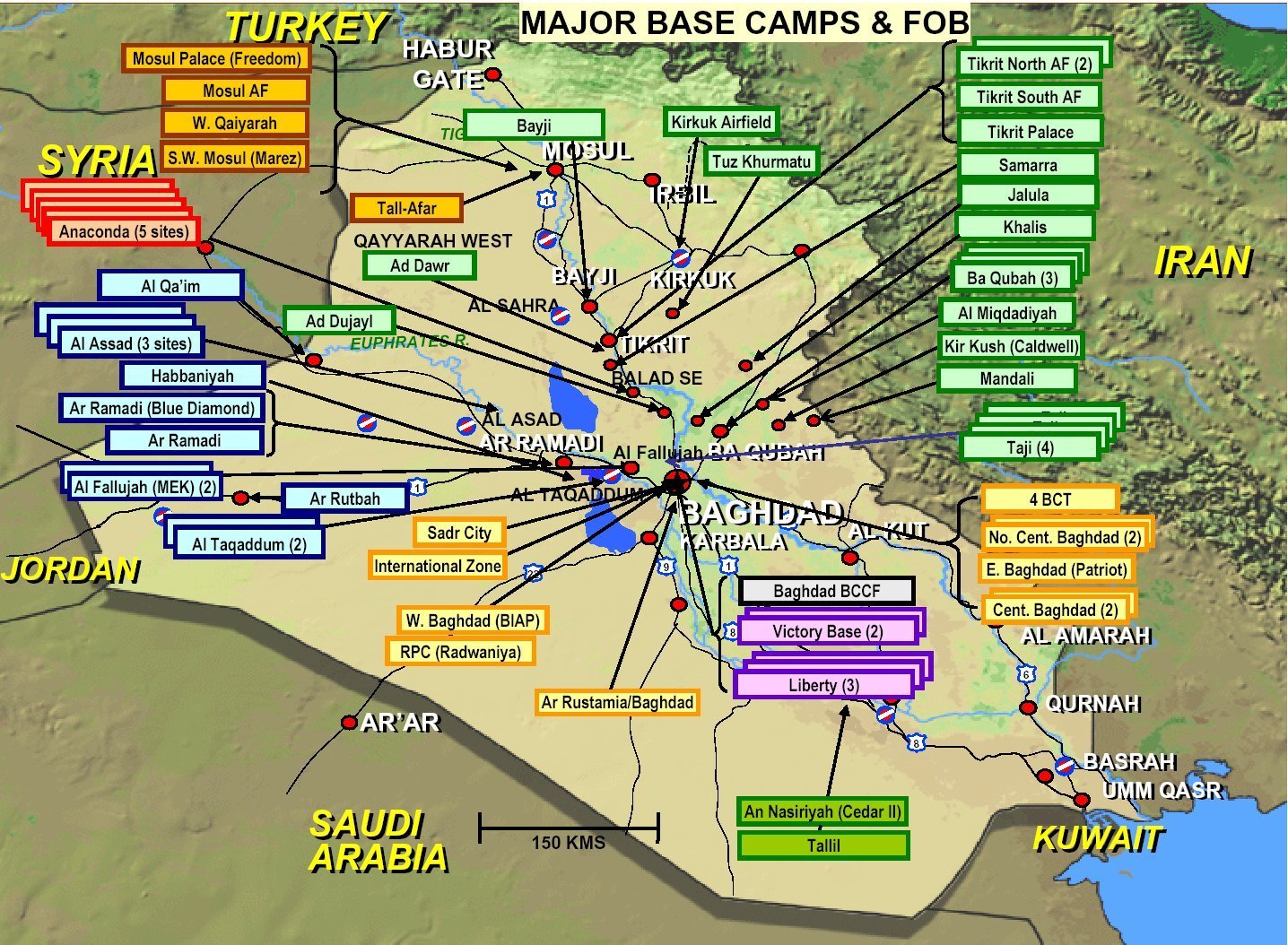
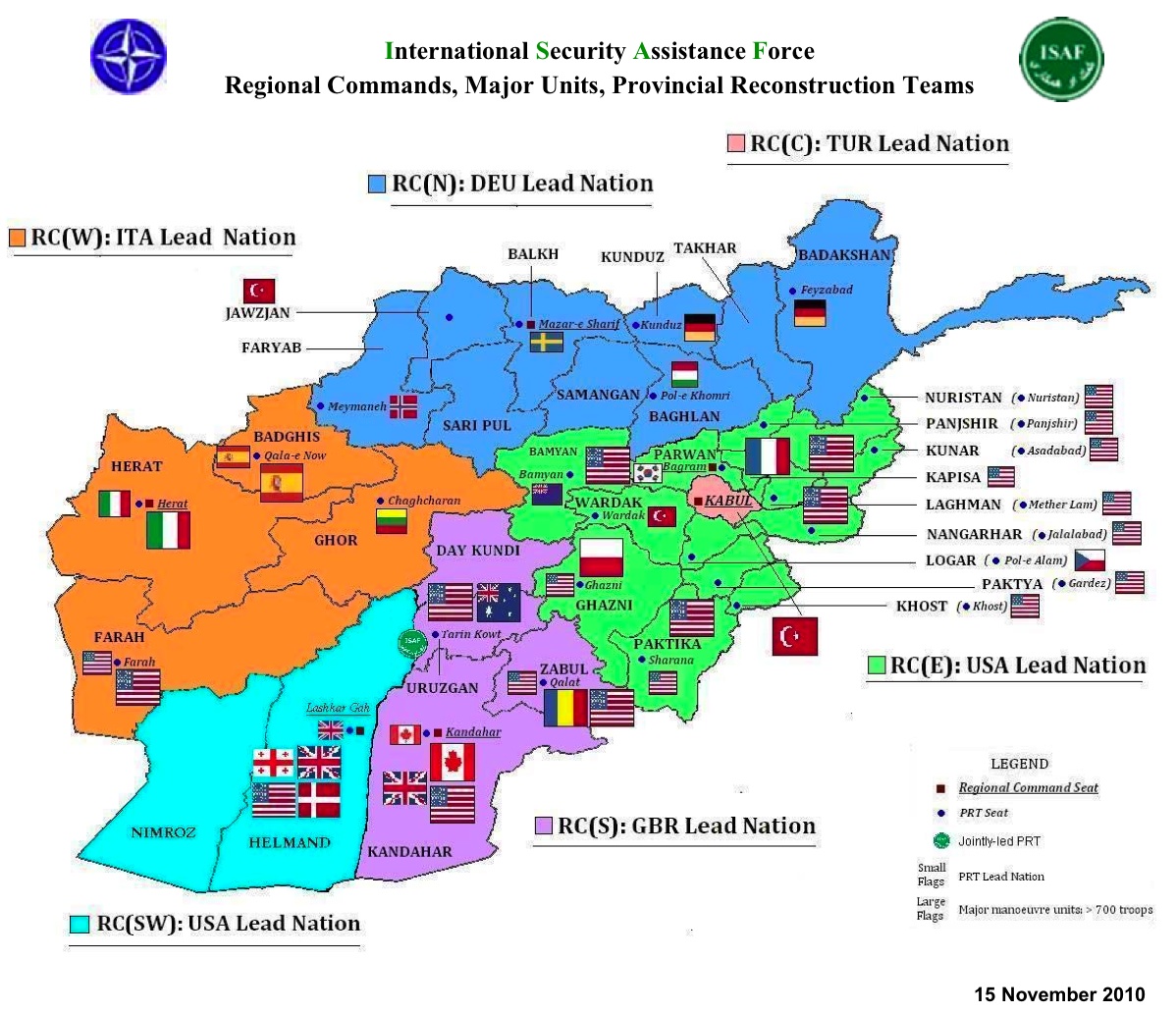
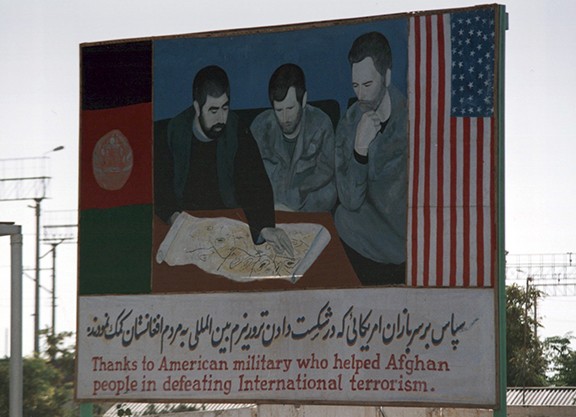
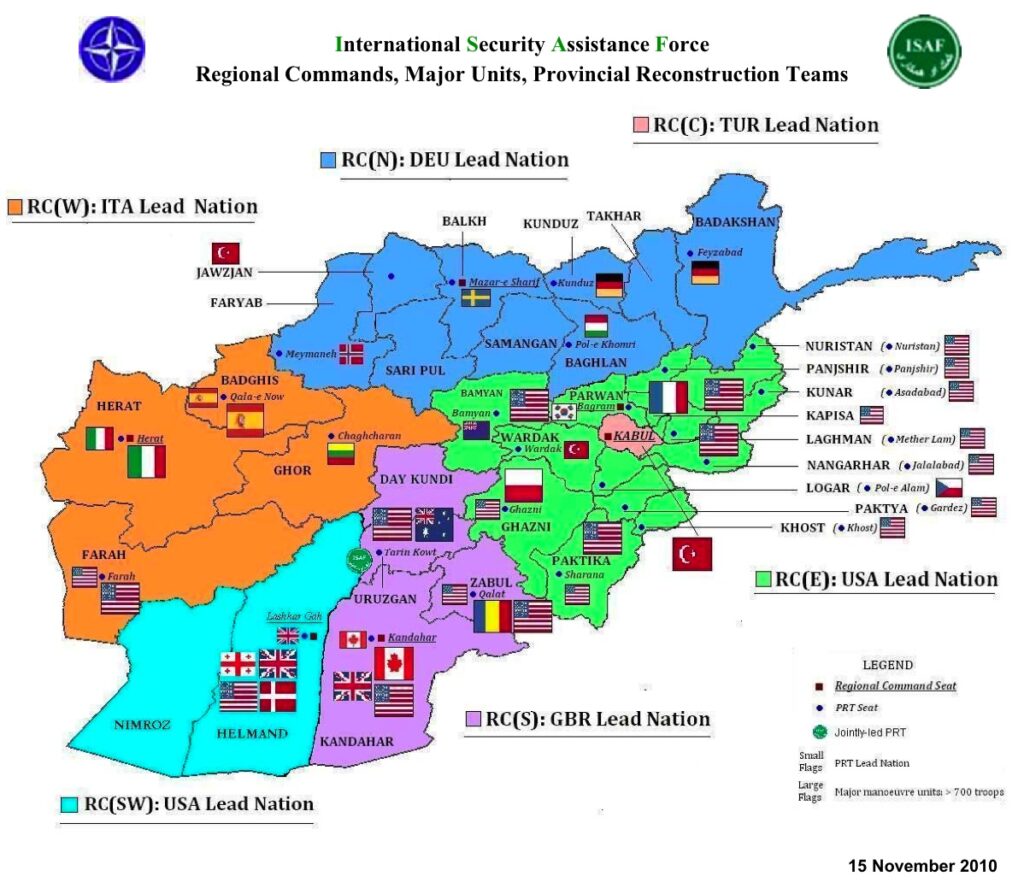
The main effort in the early stages of the Afghanistan conflict (2001 – 2021) saw a renewed reliance on special forces and special mission units. Army Special Forces famously chased Al Queda on horseback through the mountains of Afghanistan and helped rebuild the Afghan Northern Alliance forces to push the Taliban from power. Later, as the wars in Iraq and Afghanistan dragged on, the US built large operating bases and brought in heavily armored vehicles by the thousands. Despite the rapid and overwhelming success of special mission forces, the focus once again returned to traditional military models. The US even attempted to rebuild an Afghan National Army (ANA) in the mode of a modern, heavily equipped army. Insurgents continued to use small units, guerilla tactics, and hit-and-run methods against large formations, fixed positions, and supply convoys. Thousands of casualties were inflicted by improvised explosive devices, ambushes, and snipers.
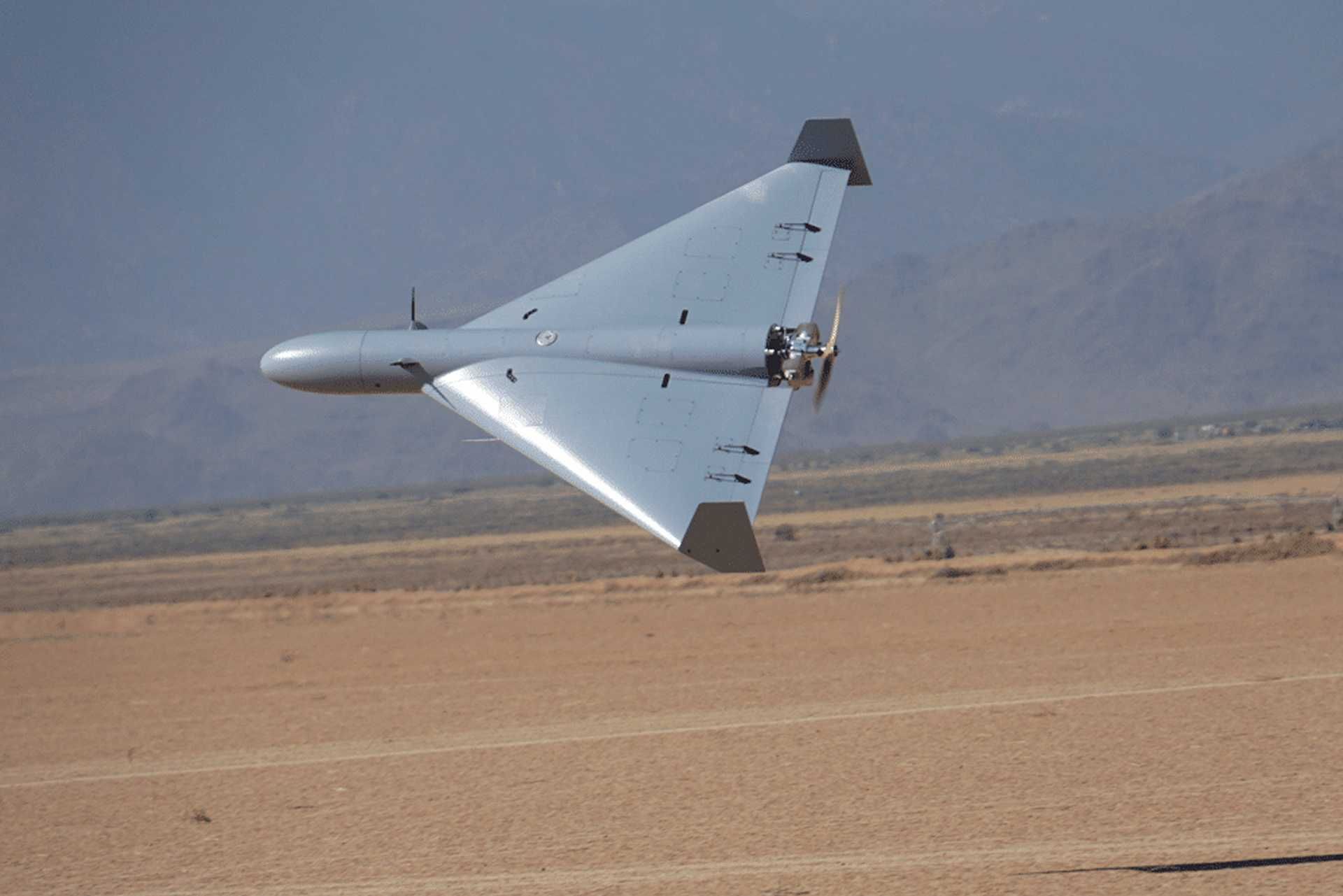
Today, the threat of asymmetric and irregular warfare is exponentially greater. The advent of drones and automation, combined with artificial intelligence, dramatically increases the lethality of small units. The wars in Ukraine, Israel, and Iran have demonstrated how waves of small, unmanned devices can wreak havoc on fixed defenses or vulnerable supply lines.
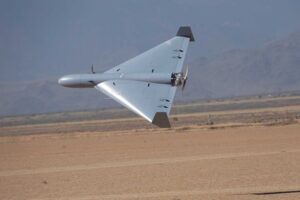
The US is moving quickly to adapt to the new environment, establishing new units dedicated to both offensive and defensive use of drones and other new weapons. Recent changes to the military procurement system have improved the speed of weapons development programs, which is essential to survival in the new world. Recent conflicts have clearly demonstrated how small units, using cheap and easily obtainable weapons can massively impact the modern battlefield. Small, elite, and special mission units will be vital in the future.
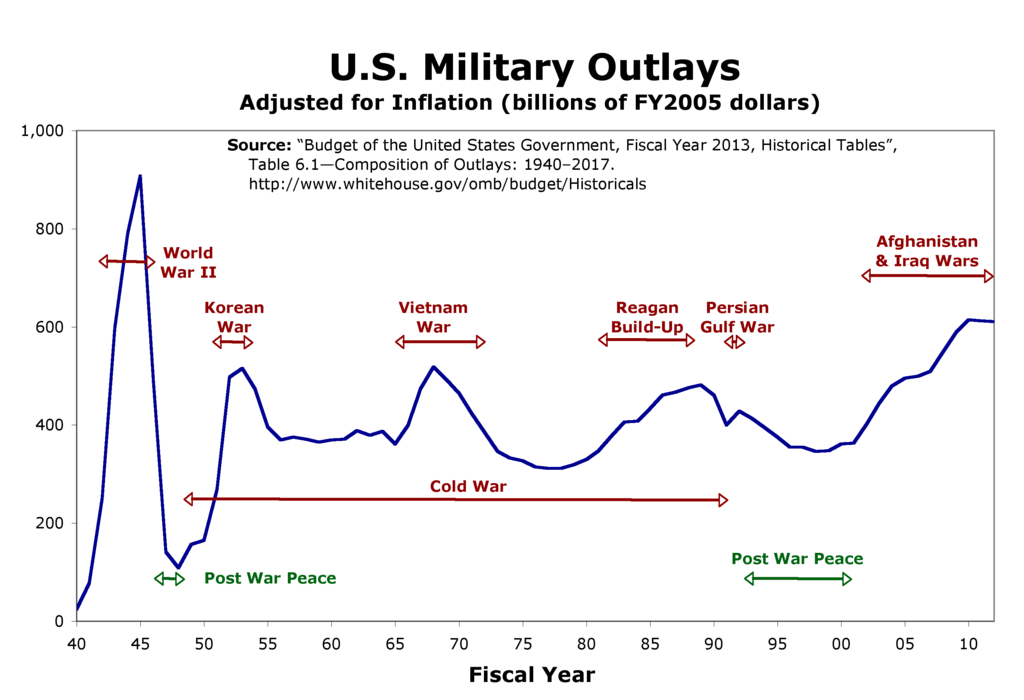
The US sought to disarm following each major conflict, including WWII, Korea, Vietnam, and the Cold War. In each case, small and special mission units like Special Forces typically suffer disproportionate reductions in favor of traditional formations. Let’s hope that the lessons of guerilla wars that extend all the way back to 1775 are not forgotten but embraced as we work to maintain a future of peace and security.
CURRENT OPERATIONS UPDATE:
In my upcoming novel Killer’s Reign, the main character is a former Special Forces team leader out for justice. The manuscript has come back from the editor, and I expect to complete the requested rewrites in the next two weeks. I am excited to get this story out to readers this year! Meanwhile, I also continue to work on the rewrite of my novel and screenplay, Sleeper Cell.
I am also working on my next novel, Tommy’s War, based on the true story of a British Commando operating behind the lines in WWII. As a history buff and former soldier, this story speaks to my heart, and I am thrilled to be working on it.
COMMUNICATIONS UPDATE:
There is never any shortage of story ideas, news cycles are loaded with intrigue, action, and potential story lines. Aside from current events, there are innumerable stories from prior conflicts that have yet to be told. In Tommy’s War, I am bringing to light some of those stories. Although I write works of fiction, I strive to ensure that the events and characters are plausible and representative of real word events and scenarios.
The Success Playbook, the fifth in the series and the second volume that I have contributed to, is now available on Amazon. Signed versions of paperback and hardcover versions are for order by contacting me through my website. The book includes chapters from several business leaders and coaches and quickly became the #1 new release and #1 in Business Education. This book joins the previous release,
The Coach’s Playbook, which also achieved best seller status in July 2025.
Check my website regularly for more information about my books and stories, updates on current events, links to other works, and interesting tidbits of intelligence.
https://gregsmithonline.com/
www.linkedin.com/in/gregmsmith17
Stay Alert. Stay Informed. Stay Aware.