Memorandum
Subject: Persia, Iran, And The Great Game
To: All Readers and Interested Parties
From: Greg Smith, Author
Date: 10 APR 2026
BACKGROUND:
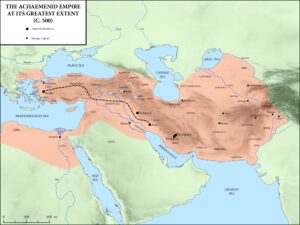
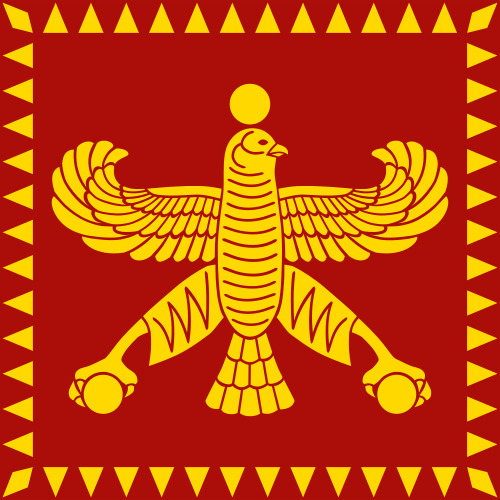
Cyrus the Great overthrew the Median overlords, creating the Persian Empire, one of the greatest and largest of antiquity. The empire that he, Xerxes, and Darius created stretched from modern-day Egypt to India. Though the empire incorporated numerous tribes and peoples, they emphasized tolerance, integration, and respect for local customs. When Cyrus conquered Babylon in 539 BCE, he went so far as to free the Jewish exiles there and provide funds to rebuild the temple in Jerusalem.
The Persian Empire under Darius attempted to conquer Greece but was defeated at Marathon in 490 BCE. Xerxes tried again to conquer the Greeks but faced an improbable stand at Thermopylae in 480 BCE. There, a small force of Greeks, anchored by 300 Spartan warriors, held back the vastly superior Persian force long enough for the Athenian navy to defeat the invading forces at sea. Persia never conquered Greece. The costly military campaigns resulted in economic difficulties, high taxation, and internal strife.
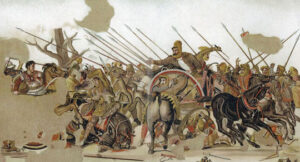
With the Persian Empire in decline, a brilliant young Macedonian warrior named Alexander launched a war of conquest in 334 BCE. His decisive defeat of the Persians in 331 BCE effectively ended the Persian Empire. A succession of leaders attempted to replicate or rebuild the empire between 330 BCE and 637 CE but were only mildly successful. The Arab conquest of Persia (637 – 651 CE) brought Islam and marked the end for the Persian Imperial tradition.
A struggle for the control over Islam and the burgeoning caliphate erupted in 680 CE. The Umayyad Caliph appointed his son as successor upon his death. The appointment went against the practice and tradition of community consensus (Shura) and led to a fissure among the faithful. Hasayn ibn Ali, grandson of the prophet Muhammed refused to pledge allegiance to Yazid. Husayn led a band of followers against Yazid, but was intercepted near Karbala, in modern-day Iraq. Outnumbered by as much as ten to one, Husayn and his followers fought valiantly but were slaughtered. The massacre galvanized followers of Ali (Shi’at Ali) into a new sect of Islam. The battle became the defining moment for Shia Islam, demonstrating sacrifice, justice, and resistance to oppression. The battle of Karbala remains a central influence over Shia ideology and standing for beliefs in the face of overwhelming odds.
Once an unstoppable empire, Persia became a mere chess piece in the battle for global domination. Arabs, Mongols, Turks all imposed their rule over Persia. It was not until the Safavid Dynasty (1501 – 1736) that Persia once again developed its own identity. Under the Safavids, Persia embraced Shia Islam to differentiate themselves from the Sunni Ottoman Turks to the west and the Sunni Uzbeks to the north. Shia Islam became the unifying force that allowed the people across Persia to coalesce into a nation that could resist foreign domination.
The Safavids established relations with European nations and began to expand Persian influence. However, internal strife, economic troubles, and military defeats weakened the dynasty. Ottoman Turkey, Tsarist Russia and eventually Imperial Britain began to exert influence and control over Persia.
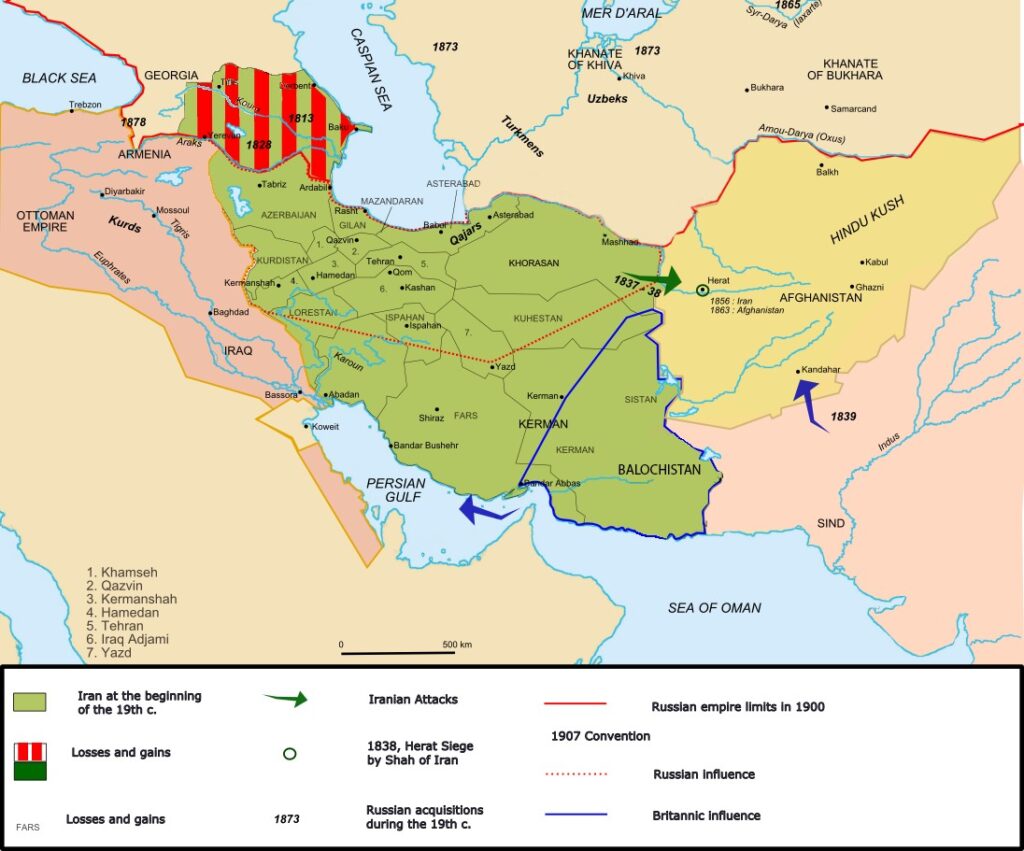
The Safavids were replaced by the Qajar Dynasty (1789 – 1925) but came to power at the height of European Imperial expansion. The nineteenth century was defined by a series of wars between Russia and Britain, as well as with Persia. This period came to be known as “the Great Game.” The Russians held sway in the north, and the British, exerting both military and commercial influence, controlled the south. The failure to defend the realm fatally weakened the monarchy.
The Anglo-Russian Convention of 1907 formally divided the country between Russian and British control. Only a small portion of the country remained in Persian control. The discovery of oil in 1908 empowered British commercial interests and further weakened the monarchy. The need for oil and control of the sea lanes embroiled Persia in the European war and continued a pattern of European dominance, fostering discontent. Rationing, agricultural disruptions, and control of the food supplies by the British led to widespread famine between 1917 – 1919 that resulted in the death of over two million Persians.
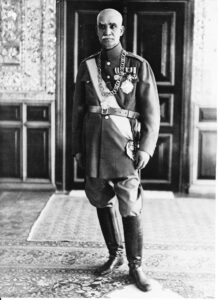
Reza Khan, an army general, emerged as a popular leader and was made Defense Minister in 1923. Khan initially had the support of Britain, who feared the spread of communist revolutions from Russia. Through deft political maneuverings and palace intrigue, Khan eventually secured power. In 1925, Parliament voted to eliminate the monarchy and installed Reza Khan as the new King with the title of Reza Shah Pahlavi. Notable among his few critics was Finance Minister Mohammed Mosadeq, who would later play a role in Reza Khan’s removal.
Despite a rapid modernization program, the Shah faced internal challenges. Having come to power through political intrigue and subterfuge, he tolerated no dissent. The Shah was quick to jail or even execute opponents. By the 1930’s, opposition to his rule had been suppressed. The Shah attempted to reduce influence of colonial powers. Treaties were renegotiated but continued to favor British commercial interests. In 1935, the Shah formally changed the name of the country from Persia to Iran. The Anglo-Persian Oil Company was thus renamed to Anglo-Iranian Oil Company, which later became known as British Petroleum (BP).
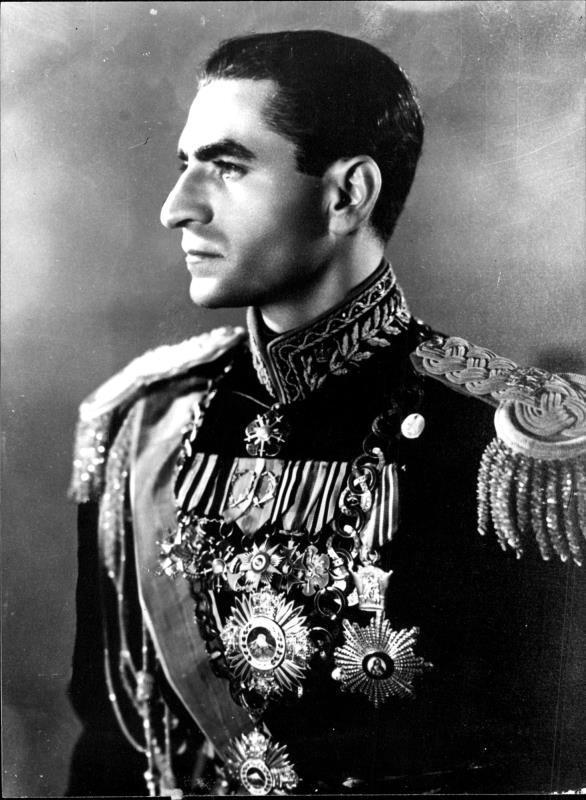
World War II placed Iran in the crosshairs once more. The Shah attempted to appease both sides and claimed Iranian neutrality. However, the German invasion of the Soviet Union led British and Soviet forces to once again invade and occupy Iran rather than allow the oil-rich country to fall under German control. The British deposed and exiled Reza Shah to South Africa, where he died in 1944. Reza’s 22-year-old son, Mohammed Reza Pahlavi assumed power through British assistance. The son was seen as a mild leader they could control.
Following WWII, the British and Soviets, under Stalin, sought greater influence. Britain convinced the US to help stop the spread of communism, and a Soviet – Iranian oil agreement was negated when the US asserted influence and encouraged the Iranian Army to reassert control. The next several years saw renewed political intrigue, an assassination attempt against the young Shah, and the rise of Communist influence. In 1951, the Prime Minister Haj Ali Razmarra, an opponent of nationalization of the oil industry, was assassinated.
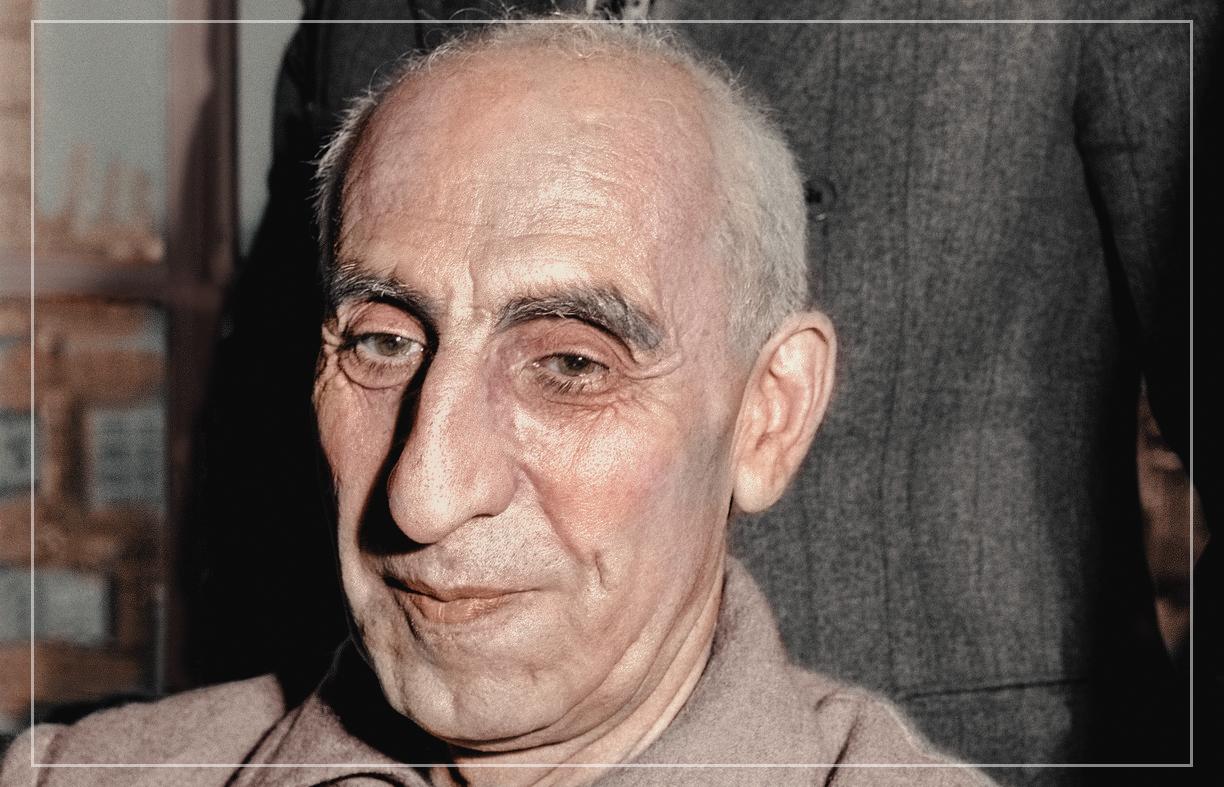
The rebel Fadaiyan-Islam mobs violently clashed with government forces. Muhammed Mossadegh, the former Finance Minister soon became Prime Minister. Initially supported by Islamic clerics, they soon became disenchanted by Mossadegh’s failure to “Islamize” Iran. Likewise, the relationship between the Shah and Mossadegh became antagonistic. The Prime Minister, a blood relative to the prior Qajar Dynasty, saw the Shah as a “ceremonial monarch”. The Shah dismissed Mossadegh in 1952 but reinstated him due to public outcry and uprisings.
Mossadegh dissolved Parliament in 1953, effectively stripping the Shah of power. The US, influenced by British concerns for their commercial interests, agreed to support a coup against Mossadegh. The coup attempt failed, and the Shah fled to Baghdad before continuing to Europe. Plotters sought refuge in the CIA station in Tehran. Mossadegh, believing that the coup had been unsuccessful, released his forces to return to their homes. However, uprisings across the country continued, some funded by the coup plotters backed with CIA funds. The protests soon turned violent, including firing a tank shell into Mossadegh’s house. Seeking an end to the violence, Mossadegh gave himself up to the Army.
The CIA flew the Shah from Rome to Tehran to reclaim power. Mossadegh was arrested, tried, convicted, and sentenced to death. His sentence was commuted by the Shah to three years solitary confinement followed by house arrest until his death in 1967. Although the Shah cemented his power, the Great Game of world domination continued.
The Islamic Revolution of 1979
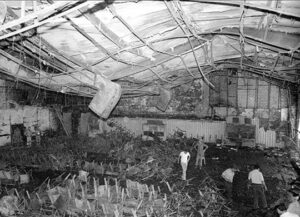
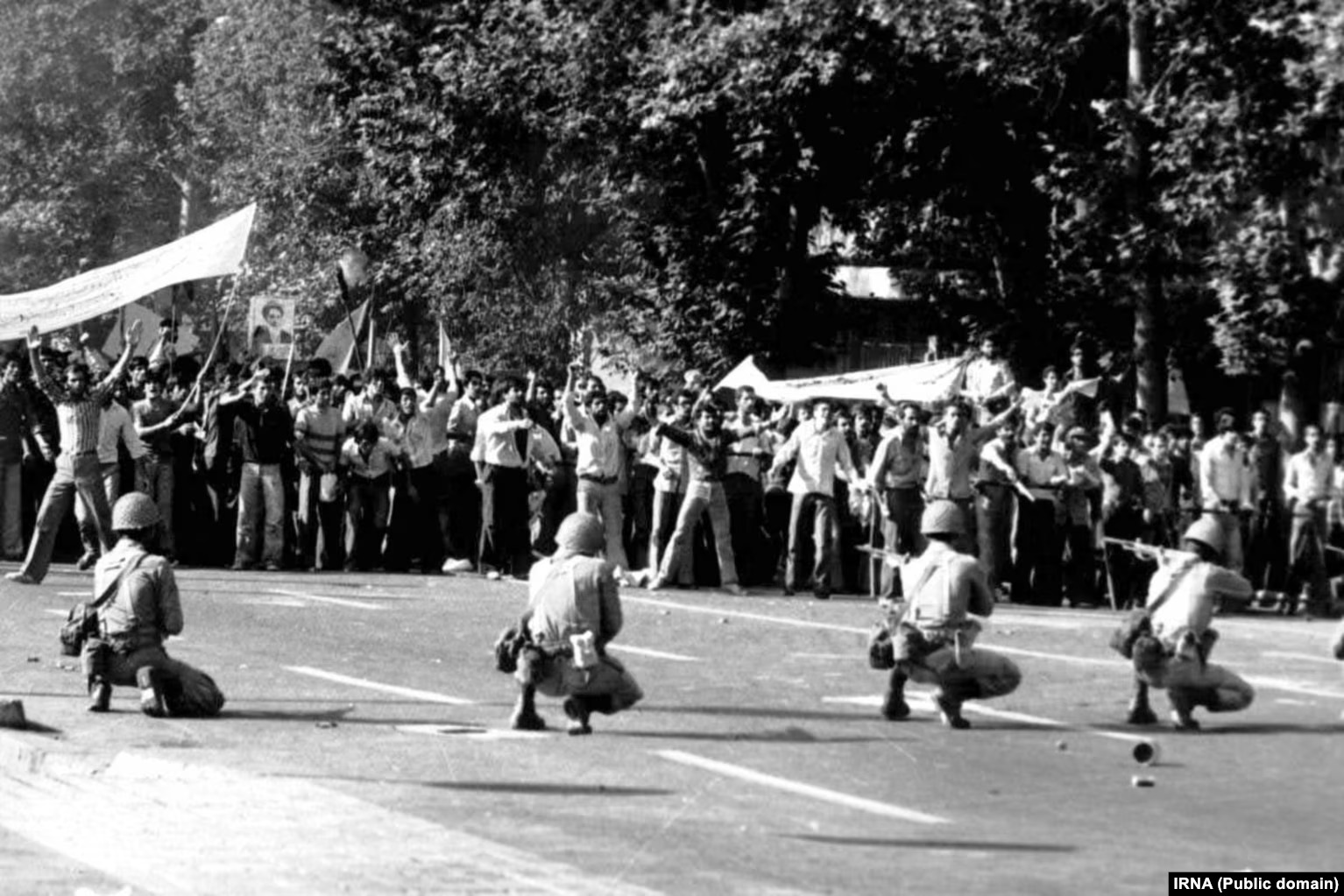
Anti-government demonstrations began in 1977 which included Islamist ideologues, socialists, and communists. The Iranian secret police, the Savak, used harsh means during interrogations and arrests. Tensions ratcheted up after the Savak were blamed for a fire at Theater Rex in 1978. The theater doors were chained shut and an ensuing fire killed over 400 people. Authorities blamed the fire on revolutionaries, but public sentiment blamed the Savak, believing the disaster to have been a false flag operation.
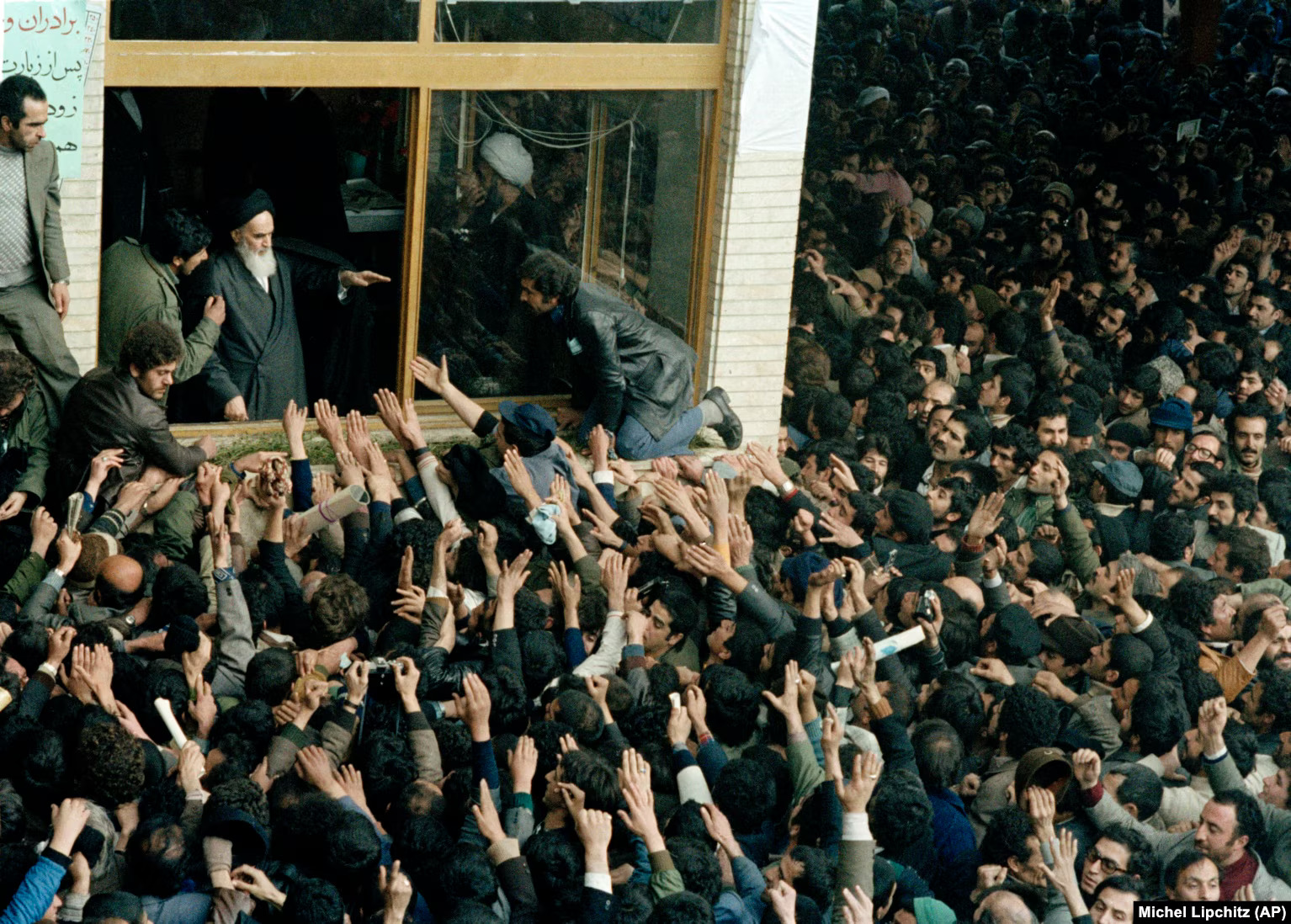
The Shah, suffering from cancer and seeking treatment in the West, left Iran in January 1979. Two weeks later, Ayatollah Ruhollah Khomeini returned from exile to Iran and was greeted warmly by millions upon his arrival. Khomeini had been a vocal critic of the Shah and his “white revolution” of secular reforms and was exiled in 1964. Within two weeks of Khomeini’s arrival, the monarchy collapsed. Although fighting between Pahlavi loyalists and guerillas still raged, Khomeini was installed as the head of the new government. In March, a referendum installing the Islamic Republic of Iran passed with 98% of the vote. In December, Khomeini was proclaimed as the Supreme Leader of the Islamic Republic of Iran and installed a regime defined by strict, fundamentalist interpretation of Islamic law.
The unrest in Iran led to rebels storming the US Embassy on February 14, 1979. In the attack, a US Marine guard, Kenneth Kraus was wounded and taken prisoner. Kraus was tortured for sensitive information and put on trial by Fadaiyan-e-Khalq militants, accused of shooting Iranian citizens. Kraus was sentenced to death by a kangaroo court but was freed within a week by the efforts of President Carter and Ambassador William Sullivan.
Protests and civil unrest continued until November 4, 1979, when a crowd of protesters entered the US embassy grounds. Initially planned as a peaceful protest, the protestors handed out cards explaining their intent to conduct a sit-in and then depart. Noting the lack of armed response (possibly due to the February event), the agitators grew bolder and soon captured the embassy, taking 52 Americans hostage. The captives were held for the next 444 days.
Islamic revolutionaries blamed western powers, especially the US and the CIA, for the excesses of the Shah. The new rulers proclaimed an Islamic state based on Sharia Law and refer to the US as “The Great Satan”. Iran embarked on a sustained path of retribution against their perceived oppressors in the west.
The New Regime Challenges the US
The Islamic Revolution of 1979 changed the calculus of international relations across the middle east. Fundamentalist philosophy dominating the new Iran created an enmity between the west and Iran that persists. The new Supreme Leader, the Ayatollah Khomeini, railed against the “imperialist” west, the “colonizers,” and the “Great Satan”, the US. In an April 1979 address to his nation, the new leader linked the revolution to a future overthrow of all nations in favor of Islam, stating that “the fulfillment of God’s almighty promise is close”. He proclaimed the infallibility of Islamic rule by stating “only Islamic democracy is correct,” and that Islamic government “does not do wrong”. He ended the speech by calling on other Islamic nations to cut off the hands of Satan in their own countries.
In some early writings, the Ayatollah proclaimed: “Islam is a religion of blood. Islam grew with blood. The great Prophet of Islam had the Quran in one hand and a sword in the other: the sword to destroy the traitors and the Quran to guide. The Quran was the guide to those who could be guided. The sword was for the heads of traitors who could not be guided. We are not afraid of blood.” Executions of former government officials began within days of taking power. By May 1979, the executions extended to writers, journalists, poets, and playwrights.
It was against this backdrop that the Ayatollah issued a proclamation calling for the arrest and execution of the Shah. After the capture of the US Embassy, President Carter refused to honor any requests for extradition of the Shah. The President offered the Shah asylum and seized Iranian assets held in US banks. The Ayatollah, emboldened by holding the American hostages, declared that “the US cannot do a damn thing against us,” which became the unofficial slogan of the revolution. Iran grew bolder and more belligerent against diplomatic efforts to free the hostages.
President Carter and his administration struggled to resolve the hostage crisis. With 1980 being an election year, the administration could ill afford to allow the situation to continue. The President approved a controversial rescue plan called Operation Eagle Claw. The complex plan involved elements of the US Air Force, US Navy, US Army, and the US Marine Corps. The plan required over 100 troops, eight helicopters, and C-130 cargo planes to land in the desert 200 miles from Tehran, refuel, and then fly to Tehran, free the hostages, and for the helicopters to return to the USS Nimitz.
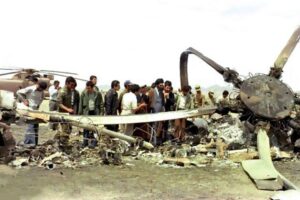
Eagle Claw unraveled almost immediately. After a series of mechanical mishaps, the mission was aborted. On departure, one of the helicopters collided with a C-130. Eight Americans died in the disaster. The rushed evacuation resulted in equipment, maps, weapons, and the bodies of the dead being left behind. The embarrassing failure of the Operation Eagle Claw reinforced Iranian attitudes toward the US and a resolve to fight against western imperialism.
Ronald Reagan rose to prominence carrying a message of American strength and resolve. He was elected President in November 1980. Within hours of taking the oath of office on January 20, 1981, Iran released the US hostages. Reagan projected strength, and Iran appeared willing to bargain with the US.
Reagan, a staunch anti-communist, focused on the cold war between the US and the Soviet Union. Other adversaries noted Reagan’s priorities. The Soviet invasion of Afghanistan occupied American interests as the conflict served as a proxy war against the Soviets. The US, through the CIA and other channels, funneled weapons and funds to the Mujahideen to fight the Soviets. The Mujahideen, armed, trained, and funded by America, received volunteers to fight from all over the Arab world and would eventually create the foundation for al Qaeda, the Taliban, and a host of other terror groups.
In September 1980, Iraq launched an invasion of Iran. Saddam Hussein, a Sunni Muslim, feared the rise of Shia fundamentalism in neighboring Iran would destabilize Iraq. The war dragged on for eight years, with the US quietly backing the Iraqis. Iran used the conflict to cover their own offensives against the Kurds and others opposed to the new regime. It was during the Iraq-Iran war that suicide martyrs flourished, after young Iranians strapped bombs to their bodies to stop Iraqi tanks. The martyrs were celebrated and revered as heroes in Iran.
A civil war in Lebanon continued unabated, expanding to include Israel and threatening to blossom into a greater global conflict. Iran, still engaged in war with neighboring Iraq, created proxies in Hezbollah and Hamas, to infiltrate and spread Iranian influence in Lebanon to offset Israel. The government of Lebanon asked for and received US intervention in 1982. Iran seized an opportunity to test US resolve and to punish the US for supporting Iraq.
On April 18, 1983, a suicide bomber linked to Iranian-backed proxies drove a truck full of explosives through the gates of the US Embassy in Beirut. Forty-six people, including sixteen Americans died in the blast. Reagan dismissed the impact and restated US resolve to help end the conflict in Lebanon. Six months later, on October 23, a second suicide bomber drove a truck bomb through the guard posts at the US Marine barracks in Beirut. The detonation (approximately six tons of explosives) destroyed the building, killing 243 Marines. A third truck bomb killed 58 French soldiers.
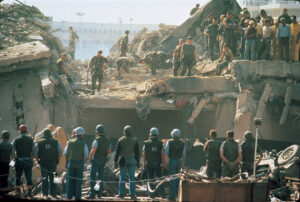
The Beirut bombing was the first real test of American strength and resolve in the middle east. A tepid response from President Reagan downplayed the event as an unstoppable attack that meant to push Lebanon into the Soviet sphere of influence. Others in the administration compared the bombings to Japanese kamikazes of WWII. Marine General Kelley, upon being questioned in Congress about security preparations, claimed that the truck bombings were a new and unique threat that could not have been anticipated. His statement ignored the scores of vehicle bomb and suicide bomb attacks in Lebanon that year. A New York Times article reported that the CIA had warned the Marines of a planned attack by an Iranian-linked group. The flaccid US response reinforced Iranian beliefs about US weakness and lack of will. The war of jihad against the Great Satan moved to a new, more dangerous level.
Between the 1983 Beirut bombings and the 2003 US invasion of Iraq, Iran continued to strike at the US through proxies. Some of the attacks may have also intended to severe US ties to other nations in the region, namely Israel, Kuwait and Saudi Arabia. Two months after the Beirut bombing, a suicide bomber drove a dump truck laden with explosive into the US embassy in Kuwait. No Americans were killed in the attack. The US, preoccupied by Cold War interests, was slow to respond.
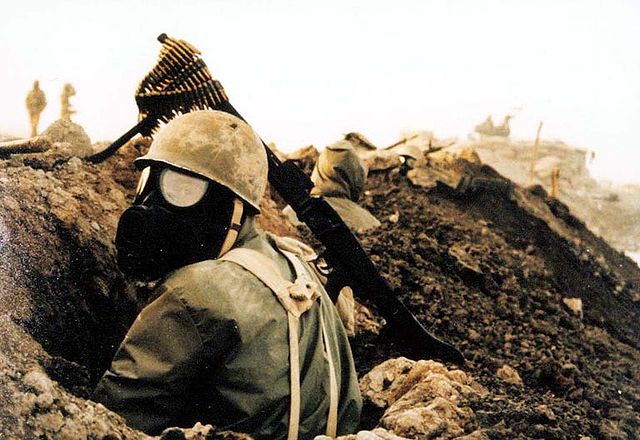
In 1984, Iraq escalated the conflict with Iran by employing chemical weapons and attacking Iranian oil infrastructure and blocking access to the Persian Gulf. Iran responded with “human wave” suicide attacks against massed Iraqi forces. Iran also attacked Kuwaiti and Saudi Arabian oil infrastructure and shipping, prompting the US to intervene. Kuwait reflagged several tankers, placing them under a US flag, to provide security. The war nearly bankrupted both countries. Meanwhile, Iranian proxies continued to carry out attacks.
Between 1984 and 2003, there were at least eighteen incidents of Iranian-linked terrorism that directly and indirectly targeted Americans. Most attacks involved suicide bombers or gunmen attacking soft targets like buses and shopping malls. Several attacks occurred in Israel. Dozens of people died in these attacks, which became the foundation for larger attacks that kept up Iranian momentum against the west. Beirut CIA Station Chief William Buckley was kidnapped by Islamic Jihad, an Iran-backed group, in 1984. Buckley was subsequently tortured and then murdered. In 1988, Hezbollah, an Iranian proxy, kidnapped US Marine Colonel William Higgins during a UN peacekeeping mission in Lebanon. He was murdered in July 1989.
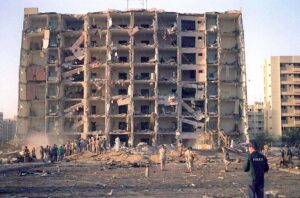
Once Iran recovered from the strain and economic issues from a long war with Iraq, they were able to more fully support their proxies. In 1996, a truck loaded with 5,000 pounds of explosives detonated near Khobar Towers, a US Air Force housing unit near Dhahran, Saudi Arabia. Nineteen Americans are killed, and over five hundred people are injured. Hezbollah Al-Jihaz, an Iranian-linked group based in Saudi Arabia, was blamed for the attack.
The rise of Islamic terrorism sparked new opportunities for Iran. Although al Qaeda and its affiliates are primarily Sunni, Iran put aside sectarian differences to facilitate strikes against the Great Satan (the US) and the Little Satan (Israel). In 1998, al Qaeda attacked two US embassies in Tanzania and Kenya simultaneously. Hezbollah, an Iranian proxy, provided training and logistical assistance to al Qaeda prior to the attack. Two hundred and twenty-four people, including twelve Americans are killed in the attacks. Although Iran was not directly involved in the 2001 al Qaeda attacks in the US, the regime maintained close contact with al Qaeda and facilitated travel into and out of Afghanistan for the terrorists. There is also evidence that Hezbollah provided training and advice to the plotters.
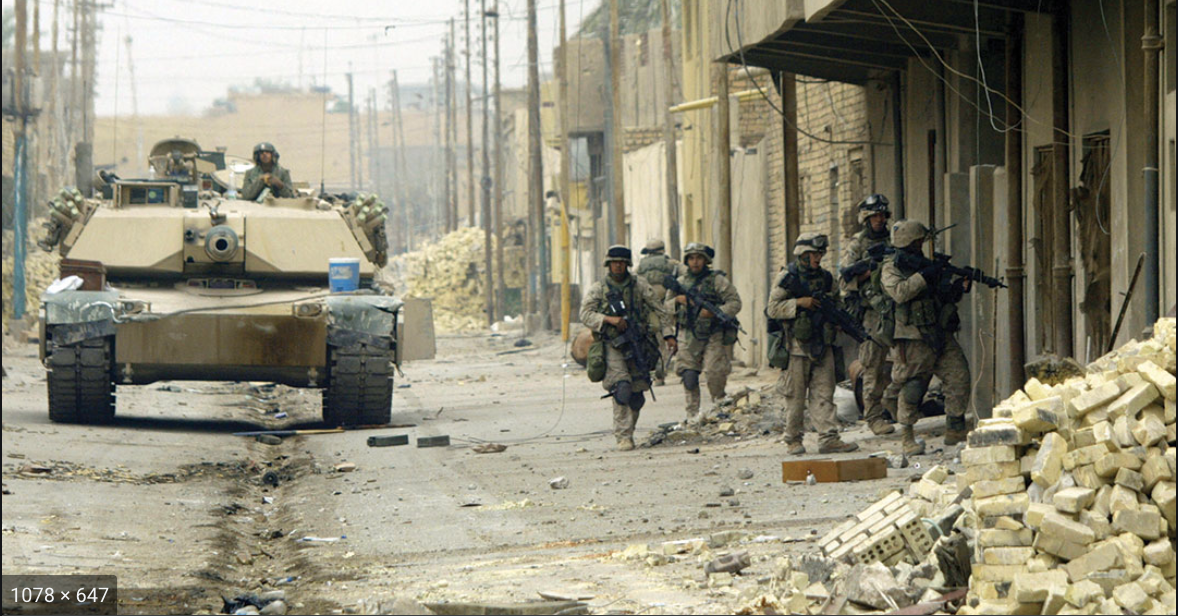
The US invasion of Iraq in 2003 provided Iran with a renewed opportunity to embarrass the US. Iran provided weapons, information, safe harbor, and open border access to militias fighting the US. Once it became clear that the US would take no direct action against Iran, support increased. Iranian Republican Guard members actively crossed the border, providing training, tactics, organization, and weapons. Iran enabled and aided the insurrection by arming and training Shia militias fighting coalition forces. By 2008, Iranian made weapons and materials proliferated on the Iraqi battlefield. Iranian methods and materials were critical to enhancing the lethality of improvised explosive devices (IEDs) used against US troops. Iran provided insurgents explosively formed penetrators (EFPs), which are essentially a copper disc on an IED. Upon detonation, the copper disc deforms and becomes a molten metal slug that penetrates armored vehicles. Iran was waging an undeclared war against the US and is thought responsible for the deaths of at least 600 Americans during the war.
Iran was emboldened by both Pakistani and Indian development of nuclear weapons. Despite a long simmering, sometimes active war over the province of Kashmir, western states were unable to prevent either country from developing and building nuclear arsenals. Iran purchased Pakistani technology, and technical advice, even hiring Abdul Qadeer Khan (AQ Khan), the “father” of the Pakistani bomb, to help develop the Iranian nuclear program. Khan sold blueprints, parts and centrifuge designs to Iran.
While seeking to create a nuclear program ostensibly for civilian purposes, Iran also purchased missiles and technology, assistance, and supporting materials from Russia, China and North Korea. The Iranian Space Program was founded in 2004 under the Ministry of Information. Simultaneously, the Iran Republican Guard Corps (IRGC) used the space program as a cover for research and enhancements to solid-fuel rocket programs. The stated goal of the space program was to provide the capability to launch satellites into low-Earth orbit. From 2009 until today, at least nine major rocket variants have been produced, including both two-stage and three-stage rockets capable of carrying five-hundred-kilogram (approximately 1100 pounds) payloads into orbit.
Western powers and the United Nations repeatedly negotiated with Iran to prevent nuclear proliferation, enrichment above the 3-5% required for civilian power, and development of longer-range missiles. Iran agreed to constraints and received cash payments and aid at nearly every negotiation but continued their development programs in secret and underground. Iran denied the existence of long-range missile programs into the start of the current conflict. The lie was exposed when Iran launched two long-range missiles at the British and American military base on the Indian Ocean island of Diego Garcia, over two thousand kilometers (over 1200 miles) away. The attack demonstrated how Iranian space technology can easily be repurposed for military capability and exposed the lie of their bad-faith negotiation.
INTELLIGENCE ASSESSMENTS:
Western countries have engaged Iran in negotiations many times. Concerns over weapons programs, cultural programs, and nuclear programs almost always resulted in compromise agreements. The agreements usually included large cash subsidies or aid packages to Iran. In the most recent agreements, the US gained agreement for inspections of Iranian nuclear facilities and programs. The International Atomic Energy Agency (IAEA) was to have unlimited access to Iranian nuclear facilities. Iran was to have the ability to enrich Uranium to less than 10% (3-5% is sufficient for power). In exchange, the US provided billions of dollars of cash and other aid to Iran. Despite agreements, inspections were often hampered by obstacles, demands, and accusations by Iranian officials. Iran continued to enrich Uranium well beyond agreed limits, up to at least 60% according to reports, a level that could be rapidly processed into the 90% required for weapons.
Iran receives billions of dollars from oil sales to China, Russia, North Korea, and India. They also receive weapons, technology, and other assistance from those partners. The funds, combined with cash, aid, and subsidies through duplicitous negotiations with the UN and US fund the Iranian nuclear program, space program, and support for proxies. Iran provides weapons, training, and logistical support to Hamas, Hezbollah, and the Houthis, as well as terror groups fighting in Syria, and Africa. Iran has long been designated the largest supporter of state-sponsored terrorism, due to the extensive proxy network.
The concern over Iranian nuclear capability was the pretext for the joint US-Israeli attack in July 2025, labeled Operation Midnight Hammer. The attack was successful and the US claimed to have severely degraded Iranian nuclear capability and programs. Much of the intelligence, targeting information, and site specifics leading up to that attack was provided by Israel. The US attacked the deep underground bunkers using ground-penetrating bombs, cruise missiles, and conventional bombs. Israel provided air support to suppress Iranian defenses, and targeted Iranian nuclear scientists for assassination.
Although the July 2025 operation most likely did set the Iranian nuclear program back but did not eliminate the uranium. The US and Israel both suspected a renewed push of nuclear development. The US attempted to negotiate with Iran, including an offer to provide materials to support nuclear power programs. Iran restated their desire to retain sovereignty for their nuclear program, including the right to enrich materials. Israeli intelligence sources concluded that Iran had renewed their enrichment and weapons programs, despite public statements by senior US intelligence officials offering assessments to the contrary. Combined with concerns over the long-range missile program (long denied by Iran) the US and Israel launched Operation Epic Fury, a sustained campaign against Iranian military infrastructure and leadership.
In a strict military view, Epic Fury has been an overwhelming success. The initial strikes decimated the Iranian leadership and eliminated virtually all air defense capability. Subsequent strikes in the first week further reduced Iranian military capability and killed more military and political leaders. Iran struck back with flurries of missiles and drones, aimed at US bases in Bahrain, Iraq, and Qatar, as well as targeting Israel directly. Iran launched additional missile and drone attacks against their neighbors, including Oman, the United Arab Emirates, Qatar, Bahrain and Saudi Arabia.
Epic Fury continues at a high operational tempo as of this writing, with nearly constant air strikes, bombings, and attacks against Iranian military infrastructure and logistics hubs. Iran responded by launching hundreds of drones and missiles against both Israel and their Arab neighbors. Iran also sent drones, autonomous boats, mines, and rockets to close the Strait of Hormuz, through which 20% of all oil shipments must pass. At least four civilian tanker ships have been struck and damaged by Iranian strikes. The US sent air strikes against key Iranian facilities on Kharg Island and along the coast target naval facilities, underground weapons facilities, and naval vessels.
Blocking the Strait of Hormuz has long been a key Iranian strategy. Iran tried to block the straits in the 1980’s, during the height of their war with Iraq after Iraq attacked Iranian shipping. The attempt caused some nations, like Kuwait, to reflag vessels to US control. The US Navy, along with other nations, provided safe passage. The operations included the largest US Navy convoy operation since WWII.
Iranian proxies have been oddly quiet since the start of Operation Epic Fury. Hamas and Hezbollah continue to launch attacks against Israel, but their efforts are limited. Both Hamas and Hezbollah have been severely reduced since 2023, when they launched the October 7 attack on Israel from Gaza. Most of the attacks on Israel have been through missiles and cluster munitions (outlawed by international convention) launched from Iran.
Likewise, the Houthis in Yemen have also been quiet during the first weeks of Epic Fury. Their leaders have made pronouncements of support, and threats to close the Bab El-Mandeb Strait on the Red Sea in retaliation. However, the group has not done so, possibly due to previous bombings by Saudi Arabia and the US Navy during 2025. The Houthis have launched only limited strikes thus far. Without direct Iranian financial and military support, Houthi capability to intervene, escalate, or respond is limited.
Epic Fury also put Iranian supporters on notice. Both China and Russia sold massive amounts of air defense and other weapons to Iran and Venezuela over the last ten years. None of the advanced air defense systems, weapons, technology, or capability could prevent or even slow the US and Israeli onslaught from the air. Both countries and their customers are surely taking notes and retooling their air defense systems. China’s incursions near Taiwan have lessened since the start of Epic Fury. Russia and China have been actively providing Iran with intelligence and targeting information on US forces, assets, and bases in the region.
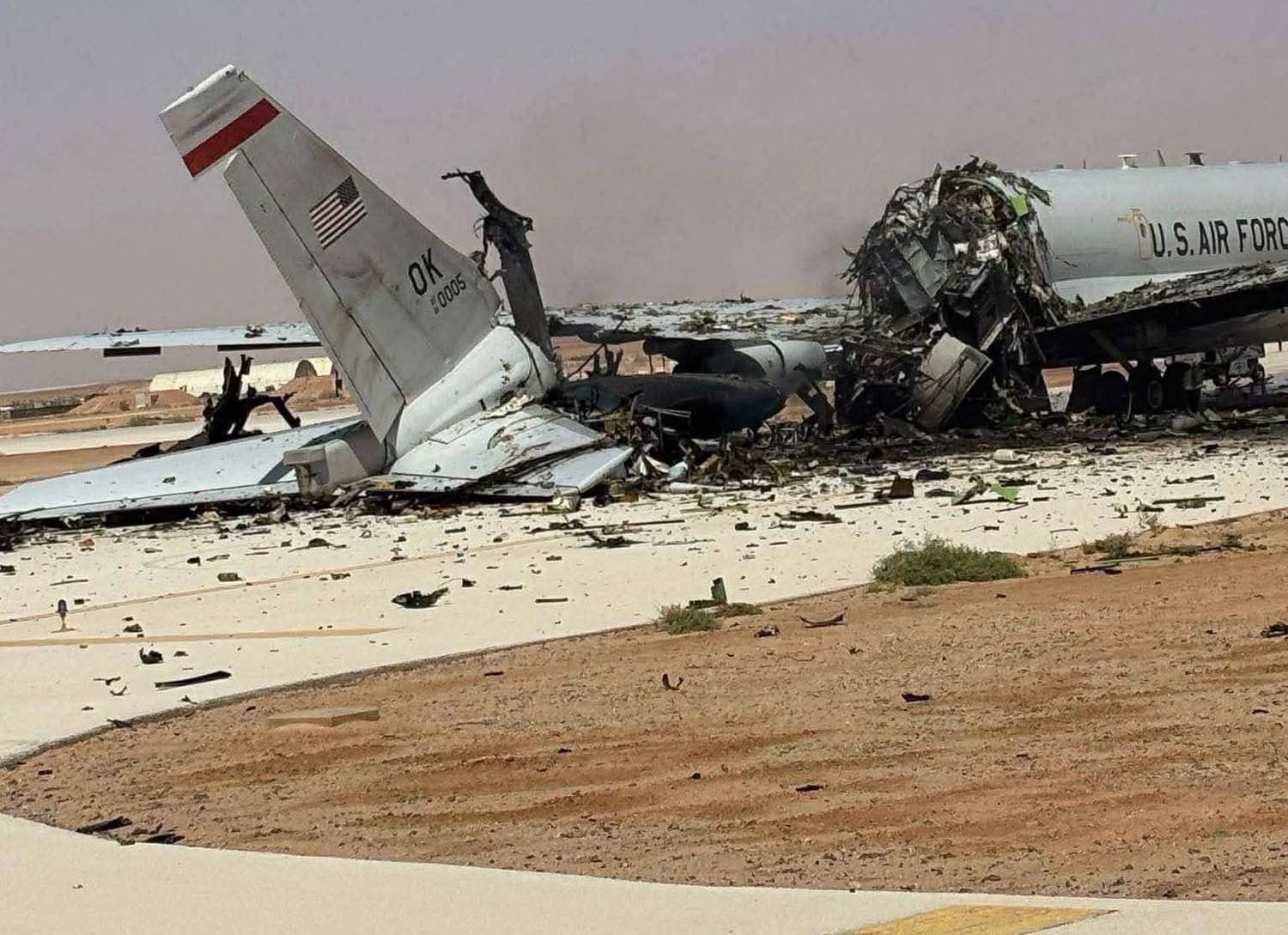
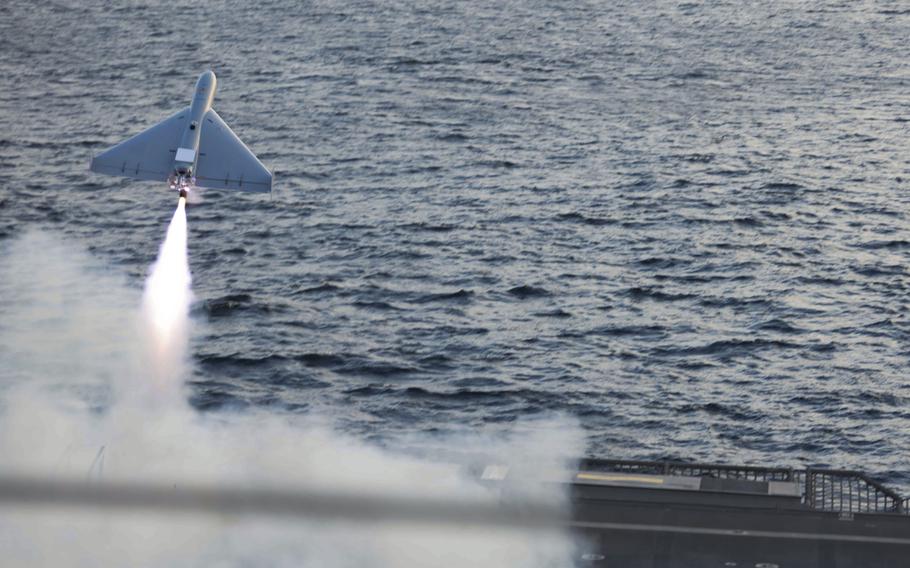
Adversary countries also have noted how the US adapted to the new reality of drone warfare. The US not only employed one-way attack drones for the first time in combat, but also quickly developed cheaper drone defense systems. Ironically, the attack drones used by the US are derivative of designs originating from Iran and modified in Russia for attacks in Ukraine. US forces have also suffered several deaths and casualties as well as the loss or damage to several refueling and electronic warfare aircraft.
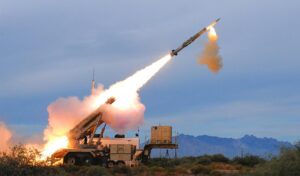
The US initially used existing and well-tested technology against Iran. The conflict has since provided opportunities for the US to battle-test other systems. A Mark 48 torpedo fired by a submarine destroyed an Iranian frigate in the first such attack by a US sub since WW II. New US Precision Strike Missiles (PrSM) were used in the longest artillery strike in US history during attacks on Iranian targets. Artificial Intelligence (AI) was used by military planners to identify and validate targets and for post-attack damage assessments. The newly developed US Space Force provides near-real-time targeting of Iranian missiles launch sites and logistical sites for strike planning.
None can doubt the capability, precision, or lethality of the US military after three major campaigns in the last year. Adversaries should also not discount US resolve or willingness to use force to further political objectives. What may be in doubt for many is how the decisions to proceed came about. The case for a large-scale attack was not fully explained prior to the attack and raised many questions. For many, Israeli intelligence and political leaders appear to have been overly influential in the decision-making process. Israeli intelligence was critical to the decision to launch both Midnight Hammer (2025) and Epic Fury.
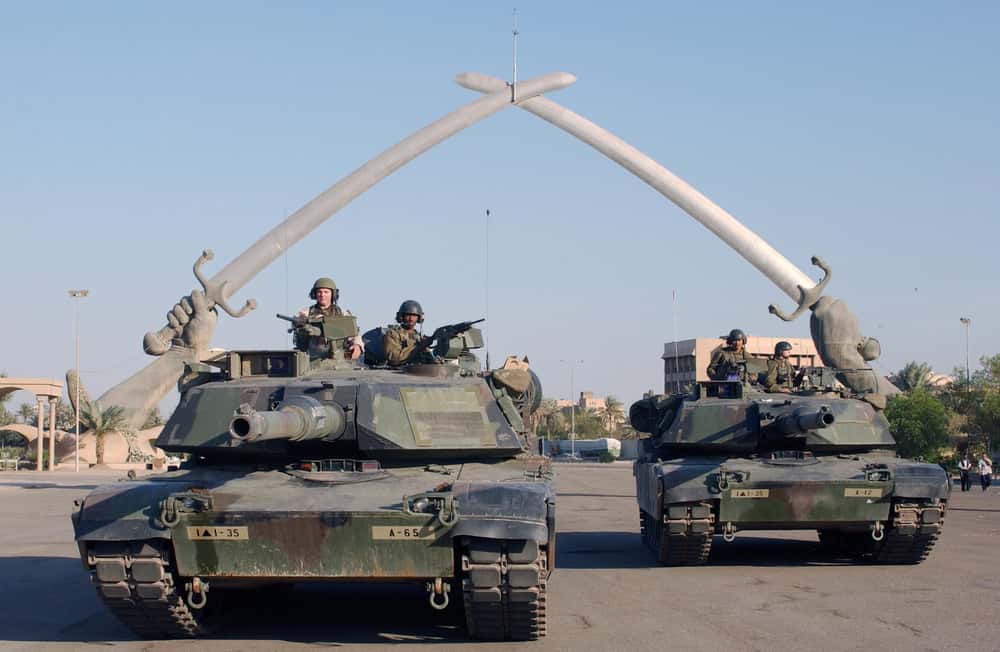
In 2001, the US intelligence community was rocked to its core after nineteen terrorists hijacked four airliners and attacked the US. Similarly, in 2003, the US intelligence assessments and briefings did not reflect that Iraq was actively developing chemical or nuclear weapons, despite having used chemical weapons against Iran twenty years prior. However, Israeli intelligence and political leaders were adamant that Iraq was developing weapons of mass destruction (WMD). Their intelligence influenced US intelligence officials and political leaders. The US invaded Iraq in 2003, largely on the pretext of Iraq’s WMD programs.
Anticipating the Outcome
Both the Secretary of War and the President make repeated assurances that Epic Fury will not devolve into the “forever war,’ or “quagmire” that the Iraq war and Vietnam war were in years past. The reality will only be determined after hostilities cease completely, and no American forces have been deployed onto Iranian soil. The US has deployed thousands of ground troops into the theater in preparation for action. Once US troops step physically (boots on the ground) onto Iranian territory, including Kharg Island or to forcibly recover uranium within Iran, all bets are off. Establishing a foothold or presence in Iran prior to a ceasefire and agreement to do so will be seen as an invasion. Such a move would signal that the US has lost control of the conflict.
Ripple effects from the conflict affect every nation. Oil prices skyrocketed and there are no signs of prices decreasing in the near term. High fuel prices affect the price of nearly everything else, from food to consumer goods, straining the economy and eroding support for the administration in a mid-term election year. Economics and politics will drive a cessation of hostilities sooner rather than later.
A significant number of Iranian leaders have been killed, but the protests that erupted just a few months ago have not resumed. The hardline IRGC and other regime protectors, appear to still be functional. Also, despite striking more than ten thousand targets, Iran is still launching missiles and drones against US forces, Israel, and neighboring countries. The regime is in survival mode but is likely to outlast US resolve and the politics of continued strikes.

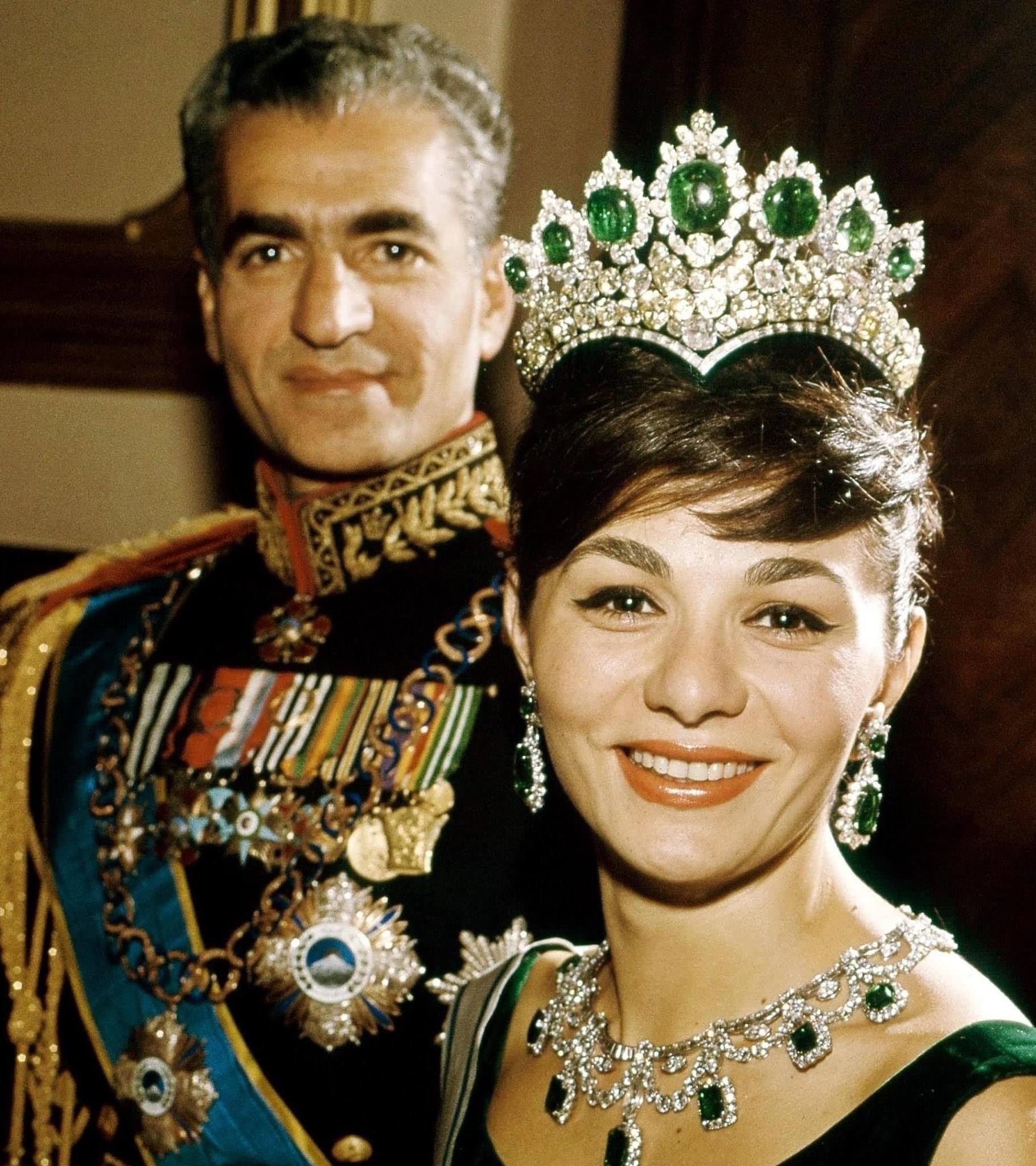
Reza Pahlavi, the son of the deposed Shah, has become a favored leader of the opposition within US circles. Pahlavi has support of dissident Iranians, who seem to hold a romantic and nostalgic view of the previous regime. The Shah did indeed support a more open, western-style culture, but he was also responsible for brutal crackdowns. Any effort by the US to install Reza Pahlavi (or anyone else) as the leader of the new Iran will be met by civil war and conflict from the many hardliners seeking to hold on to power. They will brand Pahlavi a puppet of the Great Satan. During the most recent civil uprisings, as many as thirty thousand people were murdered, and many more imprisoned, tortured and still held captive. Pahlavi cannot rule Iran in absentia, and there has been no call from the people in Iran to bring him to power. Pahlavi is a façade; the regime will survive.
Russia has been providing intelligence, targeting support, and drones to Iran during the conflict. Ironically, Iran provided drones to Russia to support attacks on Ukraine. Russia will continue to provide material and intelligence support to Iran, probably in exchange for greater access to oil, shipping lanes, and ports. Russia will also benefit from oil shipments in the Caspian and Black Sea regions due to the ongoing risks to shipping in the Persian Gulf.
China offered to broker negotiations with Iran and the US but was rebuffed by both. China receives much of their oil from Iran. China has already lost access to some oil from Venezuela, so the loss of oil from Iran increases the economic impacts. China will not directly engage, but once hostilities cease, they will be very aggressive in making deals with Iran and other countries to secure raw materials and greater access to them. China will trade technology and weapons and possibly make financial investments into the rebuilding of Iran in exchange for oil.
Iran and her proxies will regroup and retrench. Iran’s main proxies of Hamas and Hezbollah, though somewhat active against Israel, have been degraded by the Israeli response to the attacks of October 6, 2023. Similarly, the Houthis have been degraded by US strikes against them over that last year. All three groups receive funding and material support from Iran, who now must rebuild their own economy and military before they can rebuild the proxies.
Iran, Russia, North Korea, and China have all been active in cybercrime and hacking. All will continue to press on these efforts, targeting political and military leaders directly. An Iranian-linked group has already hacked into the personal email of the FBI Director. Expect to see more such attacks, and publication of personal information to discredit or embarrass the targets, Cybercrime in the form of theft and fraud will also increase and used to fund proxies and other efforts against the US and Israel.
What is not clear is what the US sees as the desired end state for the conflict. Politicians and intelligence officials have tried to make the case through speeches and press briefings, but these have been unconvincing to much of the public. Support for the conflict is waning and will drop precipitously if ground troops are deployed into Iran. Ironically, Iran may seek to extend the conflict to force political changes in the US. The economic realities of a war in the middle east means driving up fuel prices, which in turn drives up costs for everything else. A continued military operation with no clear end in sight would lead to backlash in the voting booth and greater economic challenges. Allies will also begin to withdraw from their already tepid support of the US operation as economic challenges worsen. The US needs to end the conflict quickly.
The problem with quagmires is that you do not realize you are stuck until you are already well and truly deep into the swamp. Most leaders, unwilling to retreat, see no way out but through. Quagmires come from overconfidence, folly, and the certainty that adding a few more troops, targets, bombs, or weapons will see final victory. The enemy always has a vote in the outcome.
CURRENT OPERATIONS UPDATE:
Killer’s Reign is back with the editor. The story has remained unchanged, but it is unquestionably a better, more well-rounded work of fiction. I have also settled on the basic plot line for my WW II thriller and have started working on the outline and story arc. The story will involve real characters from history, and the action will follow a Special Operations Executive (SOE) officer behind the lines. As a history buff, I am excited to get to work on this one. Meanwhile, I continue to work on the rewrite of my novel and screenplay, Sleeper Cell.
COMMUNICATIONS UPDATE:
The current news cycle is loaded with intrigue, action, and potential story lines. Current events are always fodder for a fiction author. My stories, Killer’s Reign and Sleeper Cell draw on current events as well as my own experience. Likewise, my planned historical novel relies on real people fighting behind the lines in occupied France and Italy during World War II. Although I write works of fiction, I strive to ensure that the events and characters are plausible and representative of real word events and scenarios.
Check my website regularly for more information about my books and stories, updates on current events, links to other works, and interesting tidbits of intelligence.
https://gregsmithonline.com/
www.linkedin.com/in/gregmsmith17
Stay Alert. Stay Informed. Stay Aware.