Memorandum
Subject: Never Forget
To: All Readers and Interested Parties
From: Greg Smith, Author
Date: 3 SEP 2026
BACKGROUND:
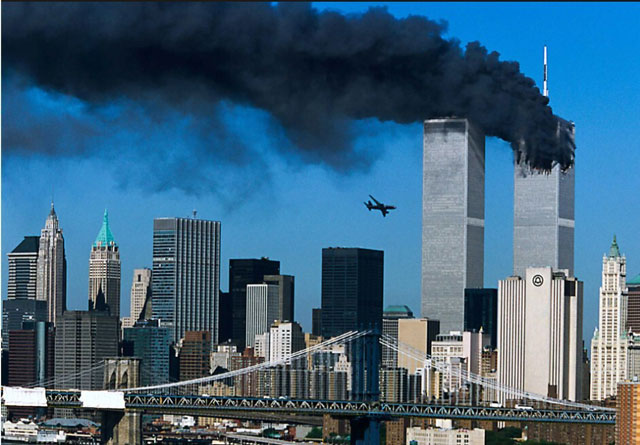
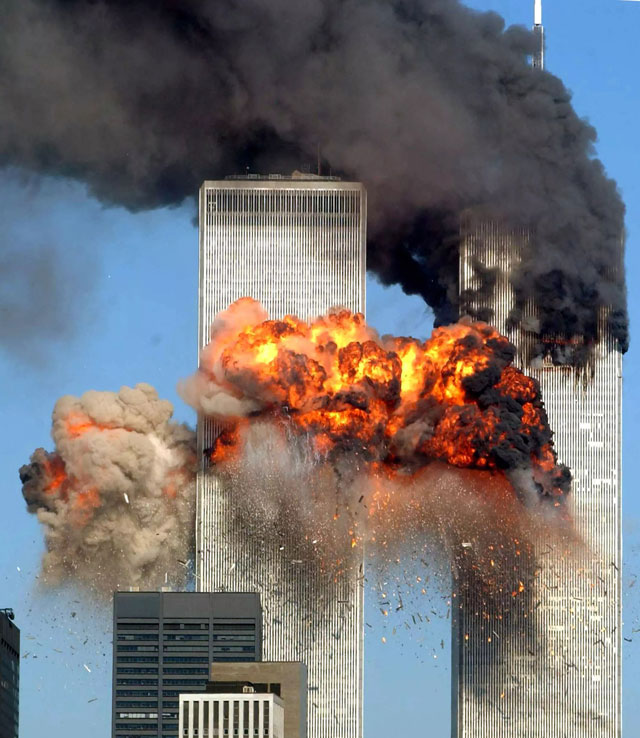
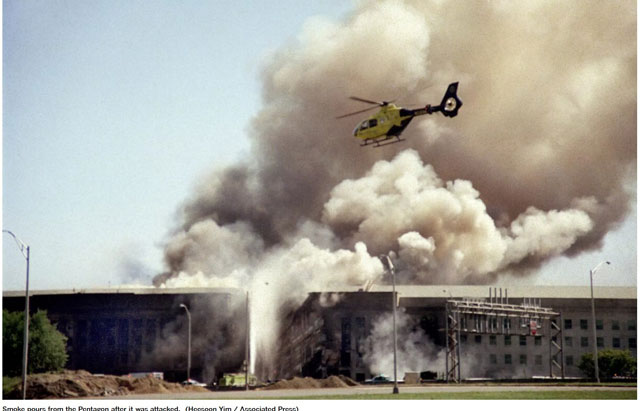
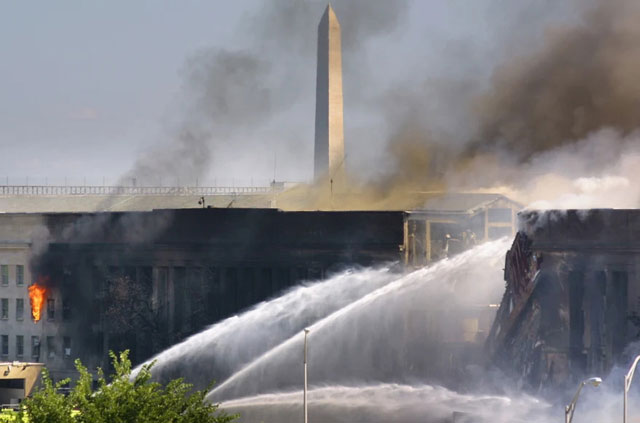
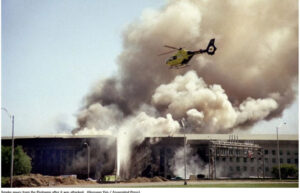
In the space of less than two hours on a beautiful, bright, sunny Tuesday morning, the US was thrust into a new war. At 8:46 am on September 11, 2001, American Airlines Flight 11, from Boston to Los Angeles crashed into the north tower of the World Trade Center in New York City. Just over sixteen minutes later, United Flight 175 slammed into the south tower. Thirty-four minutes later, American Flight 77 dove into the western side of the Pentagon in Washington D.C. The passengers on United Flight 93, having been alerted to the fate of the other hijacked airliners, revolted, forcing the aircraft down, crashing into a field outside Shanksville, Pennsylvania at 10:03. Two minutes later, the south tower of the World Trade Center collapsed, followed at 10:28 by the north tower. Live television news broadcast the horrendous events to the world.
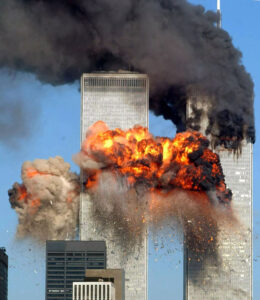
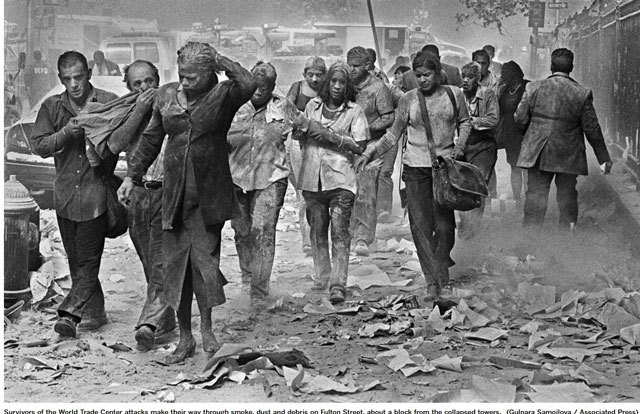
The nation was rocked by the extent, complexity, and brazenness of the terror plot. Television broadcasters, many in tears, had to filter their reporting as the towers burned and then collapsed. Still, images and videos of office workers leaping to their death to avoid being burned alive leaked through. A massive cloud of dust and debris filled the streets of lower Manhattan. Dark gray dust, reminiscent of volcanic ash from the eruption of Mount St. Helens in 1980, coated everything and everyone. Amid the carnage, police and firefighters raced into the burning buildings, intent on saving as many people as possible. Many first responders gave their lives that day, while many others succumbed later to cancer and other illnesses caused by ingesting the ashes.
The free world was shocked by the audaciousness of September 11, 2001, but the events could have been far worse. On United Flight 93, the passengers fought back and forced the jet to crash into an open field in Shanksville, Pennsylvania. The intended target is widely believed to have been either the capitol building or the White House. At the Pentagon, the Boeing jet slammed into the outer ring, bringing down an entire wing of the building, but most of the structure remained intact and unaffected. Like New York, first responders, service members, and civilians rushed into the inferno to rescue victims and save lives. The heroism of the day foreshadowed enormous acts of courage, devotion, dedication, and sacrifice that were the hallmark of American resolve for the next twenty years.
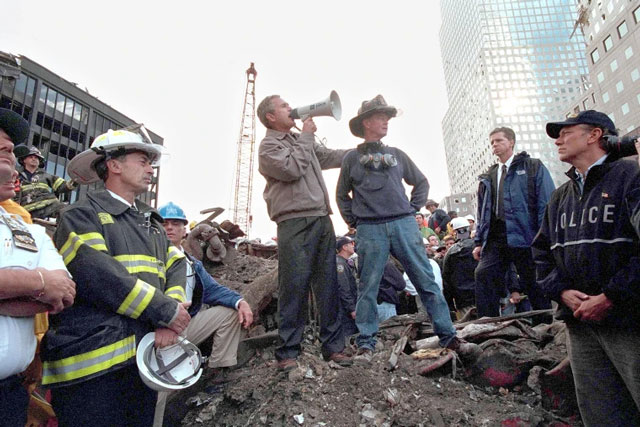
All around the country, the idea that America was attacked by a cowardly, evil, and ideologically extreme enemy soon came into focus. The nation celebrated its heroes but demanded swift and overwhelming retaliation. For the first time in at least a generation, the people coalesced around the idea that we had to strike back. President Bush summarized the sentiment when he visited the site of the twin towers on September 14, and under a flag raised on a steel beam, proclaimed in an impromptu speech to onlookers “I can hear you. The rest of the world hears you. And the people that knocked these buildings down will hear all of us soon.”
In the immediate aftermath of the attack, the island of Manhattan was sealed off and the bridges closed to aid the rescue and recovery efforts. The nation’s airspace was shut down, and the skies became eerily silent. Thousands, perhaps tens of thousands, were stranded away from home. Flights heading into the country were rerouted and diverted away. Flights that had already taken off were directed to land immediately. People everywhere opened their hearts and doors to the accidental refugees. The small town of Gander, Newfoundland, famously opened their homes to welcome the new visitors. What seemed vitally important on Monday morning was rendered trivial by Tuesday afternoon.
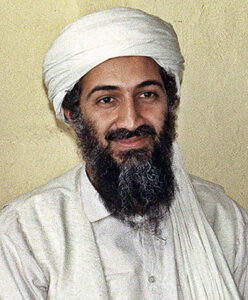
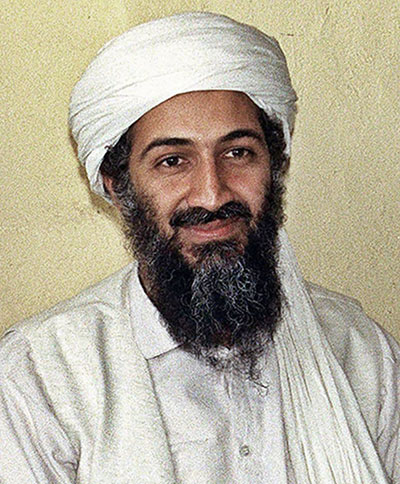
The US government and the Intelligence community very quickly assigned responsibility for the attacks to Al Qaeda (The Base), an ideologically extreme organization founded by Osama bin Laden and openly supported by the similarly extremist Taliban regime that controlled most of Afghanistan. Americans called for and expected immediate retaliation and swift justice. Unlike the response to previous terrorist attacks against US interests, the Bush Administration elected not to fling a few dozen cruise missiles toward the training camps in Afghanistan. Instead, the entire Intelligence apparatus mobilized for war. Agents and operatives from the Central Intelligence Agency were on the ground in Afghanistan before the end of September, coordinating support and activities with the Afghan Resistance located in the northern part of the country, the Northern Alliance. American military units soon joined them, including two Special Forces Operational Detachments – Alpha (ODA 595 and 555) using horses to track the fleeing Taliban and terrorists.
Thus began the Global War on Terror (GWOT). Within months, the Taliban had been routed, and al Qaeda had fled into neighboring countries, where they largely found safe harbor. The enemy had not been eliminated, nor had the ideology that fueled their desires. When the US shifted the focus from Afghanistan to Iraq in 2003, the enemy in Afghanistan resurfaced. As the war in Iraq dragged on, the enemy in both countries leveraged social media and the internet to publicize their attacks on coalition forces and to display their depravity in the execution of prisoners. The same ideology that drove the attacks of 9/11 now fueled others who sought to join in the attacks on Americans and their allies. The enemy portrayed the wars as attacks on Islam and Muslims, referring to the Western militaries as Crusaders and the coalition forces as part of a Crusader-Zionist cabal seeking to eliminate Islam.
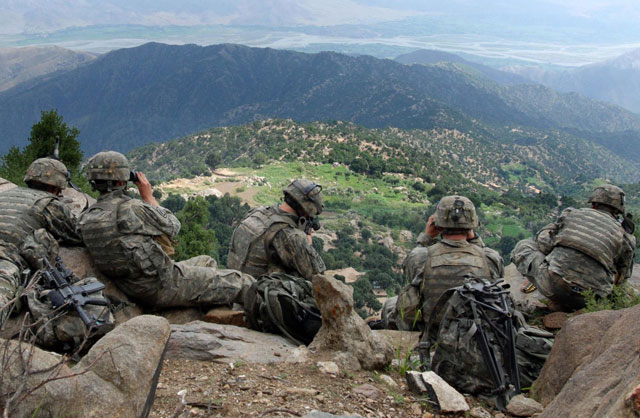
The GWOT cost the US and coalition allies trillions of dollars over twenty years of war. Billions of dollars continue to flow into both countries in the form of direct financial assistance. More than seven thousand American servicemembers died fighting in Afghanistan and Iraq between 2001 and 2021, along with more than eight thousand civilian contractors supporting the war effort. Tens of thousands more people and their families suffered irreparable harm, anguish, and trauma. Despite overwhelming military superiority on the battlefield, the US continues to lose in the battle of ideology. At an anti-terrorism summit in 2015, President Obama stated, “Ideologies are not defeated with guns, they’re defeated by better ideas.” Those better ideas remain elusive.
INTELLIGENCE ASSESSMENTS:
The events of September 11, 2001, were not the first attack aimed at Americans, nor even the first time that America was directly targeted. In the decades between the end of World War II and the turn of the century, terrorist groups and attacks multiplied. The advent of the Cold War saw the rise of Marxist terror groups while the US funded counterrevolutionary groups. Insurrections, invasions, and revolutions in Korea, Hungary, Greece, Ireland, Albania, Czechoslovakia, Africa, Vietnam, Cuba, and across South America included attacks by highly motivated and sometime state-sponsored bands of rebels. The US and Soviet Union leveraged the conflicts into proxy wars. Intelligence agencies of both nations also used espionage, propaganda, and other means to fuel the conflicts in a bid for supremacy.
By the 1960’s, terrorism became commonplace across Europe and the Mediterranean. Groups intent on overthrowing Western governments, like the Red Brigade (Italy), the Red Army Faction (RAF) (Germany), and Action Directe (France) directly targeted western government institutions, diplomats, and military members. These groups also collaborated loosely with other terror organizations like the Popular Front for the Liberation of Palestine (PFLP) and received direct and indirect support from Soviet and East German governments. The PFLP arranged training for members of these groups in Jordan and Libya, while funneling weapons and financing to them to support their operations.
Possibly the most famous terrorist event prior to 9/11, was the attack on the Israeli compound during the 1972 Summer Olympics in Munich, Germany. During that assault, members of Black September, a Palestinian group aligned with the Palestinian Liberation Organization (PLO) scaled the fence, killed 2 Israeli athletes, and took the remining Israelis hostage. The group demanded the release of 200 Palestinian prisoners held in Israel and the release of notable German militants Andreas Baader and Ulrike Meinhof, founders of the RAF. During a failed rescue attempt, all the Israelis and a German policeman were killed. The publicity of the failure led to the development of specialized and highly trained police and military anti-terrorism forces.
From 1960 until 1990, most terror operations consisted of hijackings, kidnapping of diplomats or senior officials, and targeted bombings. During the high-water mark of hijackings, from 1968 – 1974, global hijackings reached as many as one every five days. Despite years of bombings, kidnappings, assassinations, and hijackings, terrorist activity in the west had mostly stopped by 1980. Enhanced security procedures at airports, increased anti-terror policing, and greater prosecutions of terror cell members made terror operations more difficult.
Although terrorism declined, the embers still burned in the ashes awaiting the kindling needed to flare again. In 1983, President Reagan sent the US Marines to Beirut, Lebanon, to join with French paratroopers in a peace-keeping force. Islamic Jihad terrorists, aligned with Hezbollah, seized the opportunity and used truck bombs to attack the Marine Corps and French military barracks. The blasts killed 241 US servicemembers, 58 French paratroopers, and six civilians. President Reagan withdrew all US forces from the area in response. The move merely emboldened and encouraged future terrorists. It was a harbinger of things to come but was ignored at the time while tensions simmered just beneath the surface.
When Iraq invaded Kuwait in 1990, Islamist Mujahadeen, fresh off the victory over the Soviets in Afghanistan, offered to protect the holy lands from invasion. Saudi Arabia declined their entreaty and instead invited American and other western militaries to establish bases on the Arabian Peninsula. Islamists extremists decried the decision, believing that allowing ‘Infidels’ into the Holy Lands was an affront to Islam. The extremists considered the Saudi leaders as apostates and viewed westerners as defiling sacred lands. The fires of terrorism erupted again, with former mujahadeen like bin Laden fanning the flames.
Islamist terrorism between 1991 and 2001 included a series of increasingly complex and potent attacks. In 1993, the US was targeted directly for the first time, when Ramzi Youssef drove a truck bomb into the parking garage beneath the World Trade Center in New York. Although the blast created a 100-foot crater, it killed only six and the towers remained standing. Had the bomb been placed more precisely, Youssef may have succeeded in his attempt to crash one tower into the other. Youssef was later arrested in the Philippines when his bomb-making factory in an apartment caught fire. On his computer, the FBI found plans for “Operation Bojinka,” a plot to simultaneously blow up as many as 100 airliners transiting the Pacific. Youssef had already conducted a successful test run with a bomb that killed one, injured 10, and severely damaged a Boeing 747.
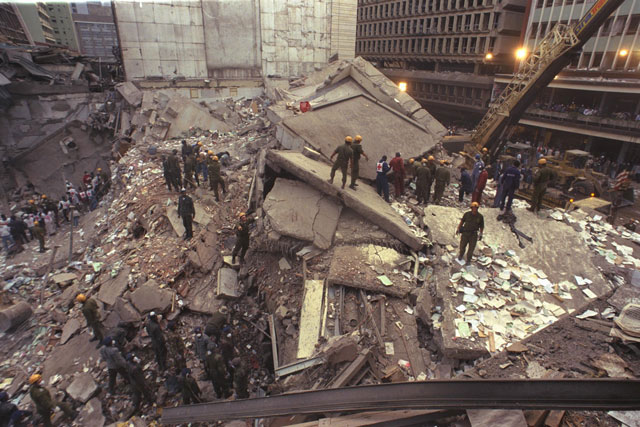
In 1998, al Qaeda terrorists detonated truck bombs simultaneously at the US embassies in Nairobi, Kenya, and Dar Es Salam, Tanzania. The bombs killed 224 people and wounded 4500 others. It was a clear escalation of attacks against the US and demonstrated an enhanced operational planning capability of the Islamic terror group. In 2000, after one failed attempt, al Qaeda successfully attacked the guided missile destroyer USS Cole in Yemen harbor using a bomb-laden speedboat steered by suicide bombers. The explosion killed 17 sailors, wounded 40 others, and ripped a 60-foot wide by 40-foot-high gash in the ship.
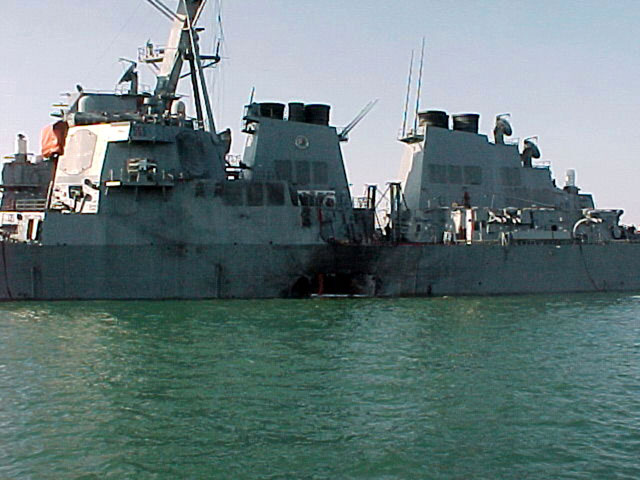
After the USS Cole, US intelligence agencies increased their efforts to uncover future terror plans. The enemy had once more clearly shown their intent to attack the US. Terror operations and methods were becoming increasingly more complex, coordinated, and dangerous. Even still, most Americans believed that terrorism was something that happened in other countries. US Intelligence and law enforcement agencies, insulated from cooperation by legal constraints, competing priorities, and long-standing grievances, continued to operate independently. Despite many indicators prior to 9/11, none of the various agencies held enough information to piece together a coherent narrative concerning future attacks within US borders. On the morning of September 11th, the US was blissfully and intentionally ignorant of the looming threat.
The Global War on Terror (GWOT) formally began on September 11, 2001, and ended nearly twenty years later with a calamitous withdrawal of American forces from Kabul, Afghanistan. During the war, thousands of Americans died or were wounded during fighting in Afghanistan, Iraq, and around the world. In the five years since the US departure, Afghanistan has reverted to the same extremist, oppressive rule that existed prior to 2001. Terrorists like al Qaeda have rebuilt training camps, using former US and NATO bases and infrastructure. The Taliban benefited from billions of dollars of abandoned military equipment and continues to receive financial aid. Border skirmishes between Afghani and Pakistani forces, especially in the Federally Regulated Tribal Areas where the government holds little sway are common.
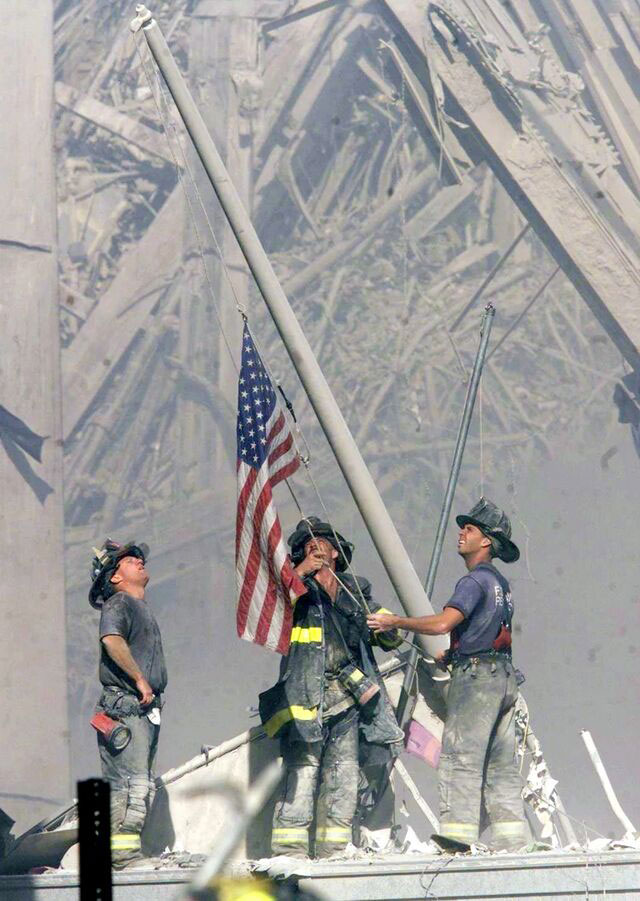
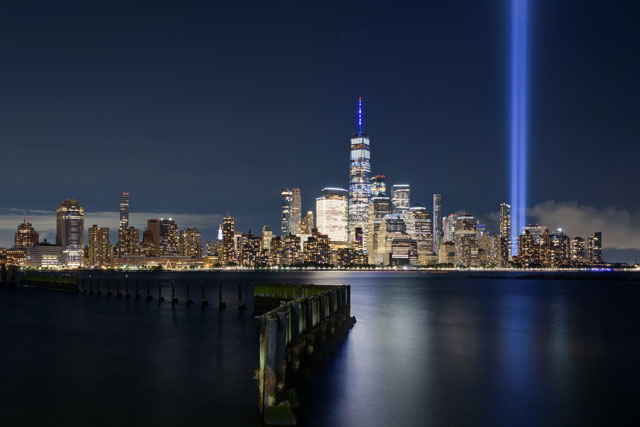
Although the GWOT ended for America in 2021, it has only just begun for our enemies, and the collective awareness and resolve of 2001 has long since dissipated. For many Americans, 9/11 is either a distant memory, or merely an item in a history book. For those who experienced the events of that day, it is a defining moment, and one that should never be forgotten. Our adversaries have not forgotten, nor stopped plotting against us. Their side of the GWOT continues unabated.
If we can learn anything from the twenty-five years of GWOT, it is that the world has become more dangerous rather than less. The advent and proliferation of new technologies provide capabilities that previous generations could only conceive of in science fiction novels. The attack on 9/11 required years of planning, training, and financing to carry out. Today, similarly devastating attacks can be executed through swarms of drones, autonomous vessels and vehicles, and cyber-attacks that can shut down critical infrastructure. The conflicts in the Red Sea saw the Houthis sink or severely damage large commercial ships, while the wars in Israel, Ukraine, and Iran demonstrate the lethality and flexibility of unmanned attacks. Operations that would have required vast resources in 2001 can be carried out by small numbers using widely available and inexpensive drones, cell phones, or the internet.
Prior to 9/11, the United States was in a period of comfortable insulation from global issues and conflict. Years of seemingly pointless war cause many Americans to question Americas role in the world, and the conduct of our government. The collective conscious of the nation has once again devolved into mindless complacency, a focus on self and personal interests, and a firm belief that there is no threat outside our borders, intent on or capable of destroying the country. But our enemies have not forgotten and do not take a similar short-term approach. As we reach the quarter-century anniversary of 9/11, we must pay attention to the threat and listen to the words of those who support our adversaries. Alas, the same short-term memory and insular focus that pervaded the US prior to 9/11 appears to have settled over the country once more. In the immortal words of cartoonist Walt Kelley in his Pogo comic strip, “We have met the enemy, and he is us.”
CURRENT OPERATIONS UPDATE:
The latest revision to Killer’s Reign is complete. The manuscript continues to evolve and improve, and I am excited to get this story out to readers this year! Meanwhile, I also continue to work on the rewrite of my novel and screenplay, Sleeper Cell.
I am also working on my next novel, Tommy’s War, based on the true story of a British Commando operating behind the lines in WWII. I am deep into research, and the biggest issue now is that there are so many excellent and thrilling stories that I must choose which to tell.
COMMUNICATIONS UPDATE:
A few weeks ago, I attended Killer Nashville, a wonderful writer’s conference. The conference included workshops, panels discussions, classes, and interviews aimed at helping writers improve their craft. There were great sessions on the emotional craft of writing, the business of writing (yes, it is a business for authors), as well as character and story development. The conference has been an annual event for more than 25 years, and included many New York Times best-selling authors, publishers, agents, and editors. I love attending events like these because they not only improve my writing and understanding of the craft, but they also provide enormous inspiration.
There is no shortage of story ideas. An old writing cliché is that ‘truth is stranger than fiction.’ I find that truer now than ever. Every news cycle provides more intrigue, action, and potential story lines. Current conflicts around the globe, in Iran, Ukraine, Israel, and Africa are rife with stories waiting for a voice. Although I write works of fiction, I strive to ensure that the events and characters are plausible and representative of real word events and scenarios.
The Success Playbook, the fifth in the series and the second volume that I have contributed to, is now available on Amazon. Signed versions of paperback and hardcover versions are for order by contacting me through my website. The book includes chapters from business leaders and coaches and quickly became the #1 new release and #1 in Business Education. This book joins the previous release, The Coach’s Playbook, which also achieved best seller status in July 2025.
Check my website regularly for more information about my books and stories, updates on current events, links to other works, and interesting tidbits of intelligence.
https://gregsmithonline.com/
www.linkedin.com/in/gregmsmith17
https://amazon.com/author/gregmsmith
Stay Alert. Stay Informed. Stay Aware.