Memorandum
Subject: Abbey Gate +5
To: All Readers and Interested Parties
From: Greg Smith, Author
Date: 6 AUG 2026
BACKGROUND:
At 8:46 am on September 11, 2001, American Airlines Flight 11, from Boston to Los Angeles slammed into the north tower of the World Trade Center in New York City. Just over sixteen minutes later, United Flight 175 slammed into the south tower. Thirty-four minutes later, American Flight 77 crashed into the western side of the Pentagon in Washington D.C. The passengers on United Flight 93, having been alerted to the fate of the other hijacked airliners, revolted, forcing the aircraft to crash into a field outside Shanksville, Pennsylvania at 10:03. Two minutes later, the south tower of the World Trade Center collapsed, followed at 10:28 by the north tower.
The events of 9/11/01 were the largest attack against the US since the Japanese struck Pearl Harbor in 1941, and the most destructive single act of terrorism in history. The responsibility for masterminding, planning, organizing, and executing the operation lay with members of Al Qaeda (the Base). The extremist Islamic group had spent years organizing, coordinating, and conducting terrorist attacks on western interests, particularly the US, since the end of the Gulf War in 1991. The group managed numerous terror training camps throughout Afghanistan, and harbored by the Taliban, a fundamentalist Islamic sect that claimed control over most of the country following a civil war at the end of the Soviet occupation (1979-89). The only real threat to full control by the Taliban was via the Northern Alliance, led by Ahmed Shah Masood, the Lion of the Panjshir. Notably, an Al Qaeda hit team disguised as reporters executed Masood on September 10th, 2001, using a bomb concealed in a television camera.
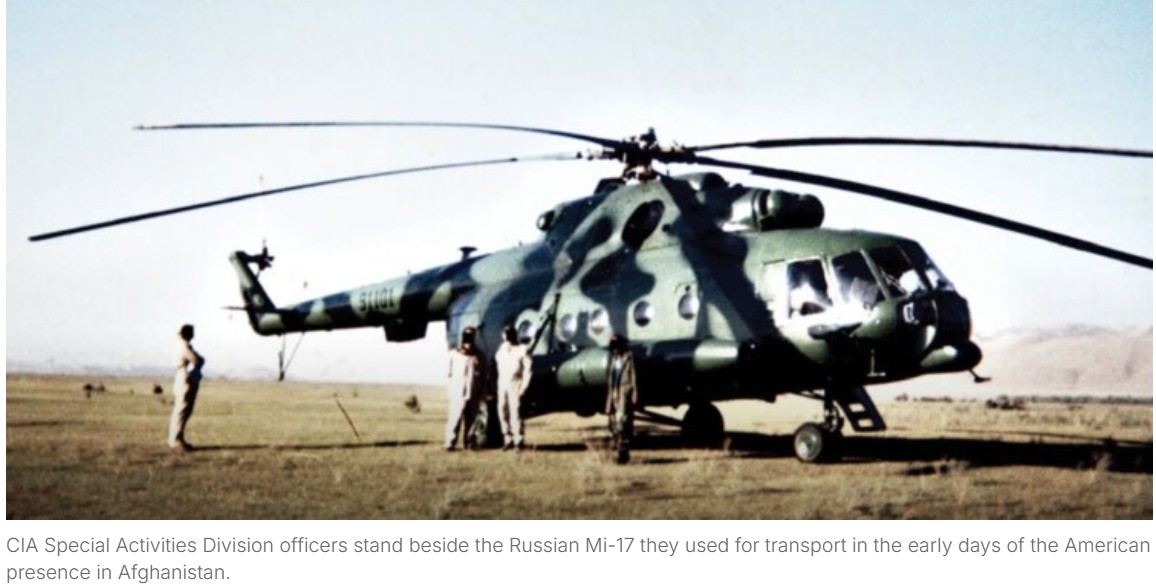
The US response to the attacks was swift and massive. The US response to previous attacks (African Embassies – 1998, USS Cole – 2000) was to launch cruise missiles against terrorist training camps. This time, the US opted for a more direct and overwhelming approach. The first CIA operatives, code named Jawbreaker, arrived in Afghanistan before the end of September. The CIA had been coordinating and maintaining a loose connection to Masood since the Afghan Civil War (1992 – 96) following the Soviet occupation (1979 – 89). Those connections now provided critical intelligence about the location of key Al Qaeda and Taliban personnel, paving the way for offensive operations.
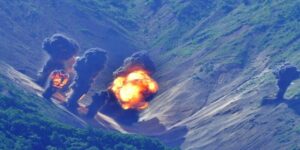
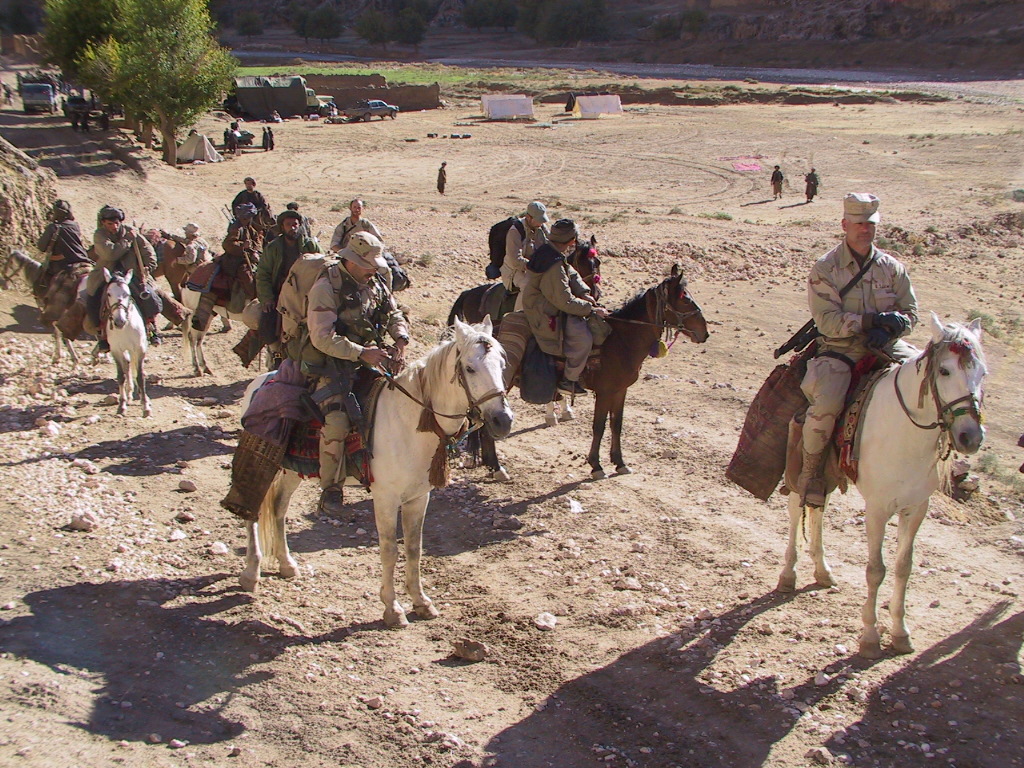
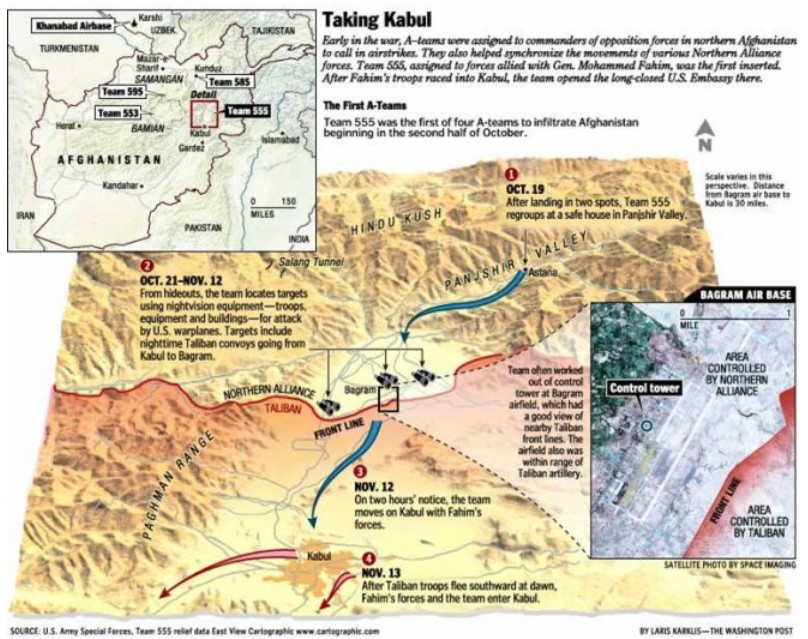
Weapons, material, and logistical support poured into the country via the northern border, leveraging the Northern Alliance connections. The first US Army Special Forces team arrived in October. Northern Alliance forces, in cooperation with US support, launched massive attacks across northern Afghanistan, taking Mazar-i-Sharif on November 8, and Kabul one week later. Senior Taliban and Al Qaeda leaders fled to the high mountain region along the Pakistan border known as Tora Bora. Those members who did not flee to the mountains scattered and sought refuge in both Afghanistan and Pakistan. Despite massive bombing and relentless tracking, key leaders, including Osama bin Laden, the founder of Al Qaeda escaped the initial blows.
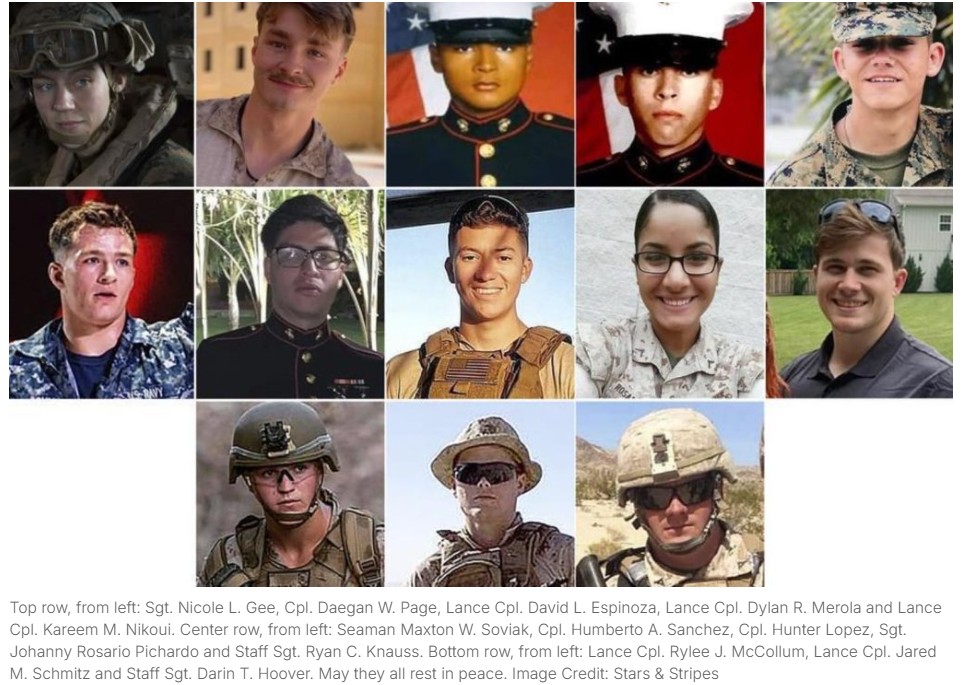
The US, with their Northern Alliance partners, had ejected both the Taliban and Al Qaeda from Afghanistan. Few realized that this massive victory would result in a twenty-year occupation, cost the US trillions of dollars, and result in one of the most disastrous and embarrassing departures in history in August 2021. In a final act of defiance, a suicide bomber released from recent US captivity detonated himself at Abbey Gate outside Kabul Airport, killing thirteen US servicemembers.
Afghanistan reinforced itself as the place where empires go to die, which proved just as true for the US as it had been for the British during their three wars in Afghanistan (1839 – 42, 1878 – 80, 1919) and Soviets prior to 2001. Following the US exit, the Taliban returned to power in a much stronger position, armed with billions of dollars of US military equipment and funded with billions of dollars of direct US aid in the guise of humanitarian assistance that continues to pour into their coffers. Likewise, Al Qaeda and other groups aligned with their extremist views have become stronger and welcomed back to Afghanistan, where they are rebuilding their capabilities and using former US training facilities, weapons, bases, and infrastructure.
INTELLIGENCE ASSESSMENTS:
Prior to 2001, most Americans would not be able to point to Afghanistan on a globe. Afghanistan is a landlocked country on the crossroads of Asia, straddling both the Himalayas and the former silk road from China. Iran, Pakistan, Turkmenistan, Tajikistan, Uzbekistan, and China border the country. It is mountainous in the east, and both plains and deserts in the west and south. Weather and temperature can be extreme in all parts of the country, including blizzards, floods, and sandstorms.
Although Afghanistan has was conquered or controlled repeatedly throughout history, none of the victors remained long. Afghanistan saw invasions or occupations by Mongols, Huns, Chinese, Greeks, Persians, Ottomans, British, Soviet Russians, and finally, Americans. The British Empire fought three wars in Afghanistan between 1839 and 1919, where the country gained its reputation as the place where empires go to die. During the 1842 retreat from Kabul that ended the first war, an entire British force of over 16,500 soldiers and civilians, minus one survivor, was annihilated. As with any conquered geography, maintaining control is far more difficult than gaining it, and that is especially true in a landlocked country like Afghanistan.
By early 2002, the American offensive in Afghanistan seemed complete. Special Operations Forces (SOF), namely Army Special Forces, and CIA ground operations teams successfully ejected the Taliban and Al Qaeda and installed a friendlier regime in power. The United Nations (UN) established the International Security Assistance Force (ISAF) to help transition the country and train local forces. Initially, the US seemed reluctant to go further, depending on diplomacy and the assistance of the forces already in place to assist the nascent government. SOF and CIA provided training to local forces while also continuing to hunt for Taliban and terrorist leaders. In response, the enemy launched a brutal insurgency against the new government, western military forces, and civilians providing aid and assistance to government or western forces.
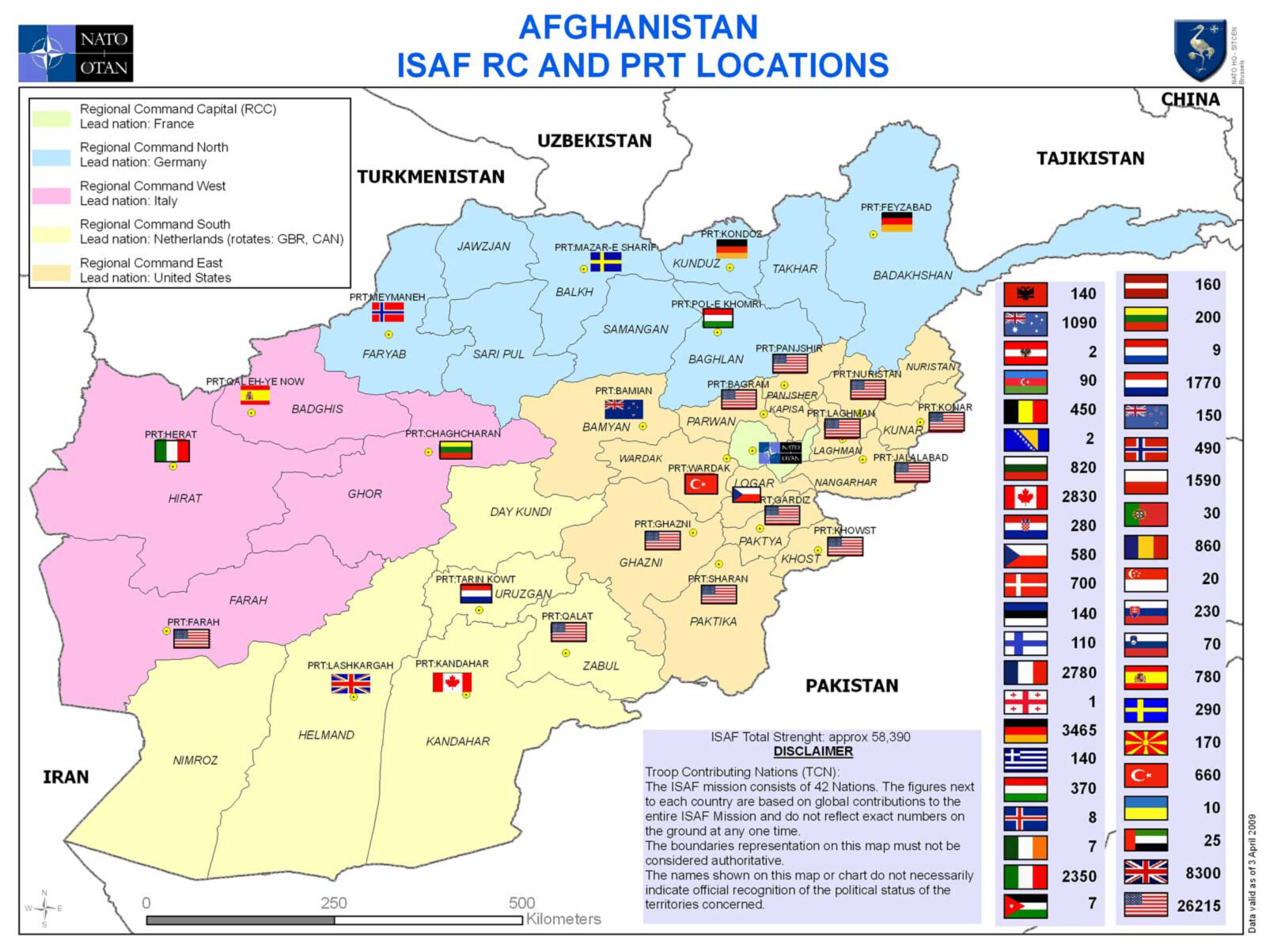
In 2003, the US invaded Iraq, which forced military and political leaders to concentrate their focus on the larger war effort and the hunt for Saddam Hussein. Meanwhile, Afghanistan drifted under UN leadership and limited military and political support, enabling the insurgency to gain a foothold. By 2004, the Taliban-led insurgency took control of smaller towns and villages across the country and were threatening to retake the major cities. The US, along with the UN and NATO, increased troop levels, leading to massive increases in logistical support needs, base and infrastructure building efforts, and civilian outreach through both military and diplomatic channels.
Troop levels continued to gradually rise as the Taliban insurgency escalated. NATO and US forces defeated the Taliban in fight after fight, leveraging better training, equipment, and airpower to overwhelm the enemy. However, there were also notable losses, such as Operation Red Wings, a joint operation involving US Navy SEALs and US Army aviators. Taliban fighters killed three of the four Navy SEALs in the initial assault. A US Army Chinook helicopter, carrying the Quick Reaction Force was ambushed, resulting in the loss of eight more SEALs and eight Army SOF aviators from the 160th Special Operations Assault Regiment (SOAR).
The war in Afghanistan remained the smaller of the two US engagements, but the more logistically challenging effort. After years of minor progress and continued insurgent activity, President Obama authorized General David Petreus to initiate a surge operation in 2010, reminiscent of his successful surge campaign in Iraq earlier. By 2011, at the height of the surge, total coalition and US troops numbered almost 200,000. At the peak of the surge, there were over five hundred Camps, bases, Forward Operating Bases (FOBs), Combat Outposts (COPs), Observation Posts (OPs) and military assistance sites across the country.
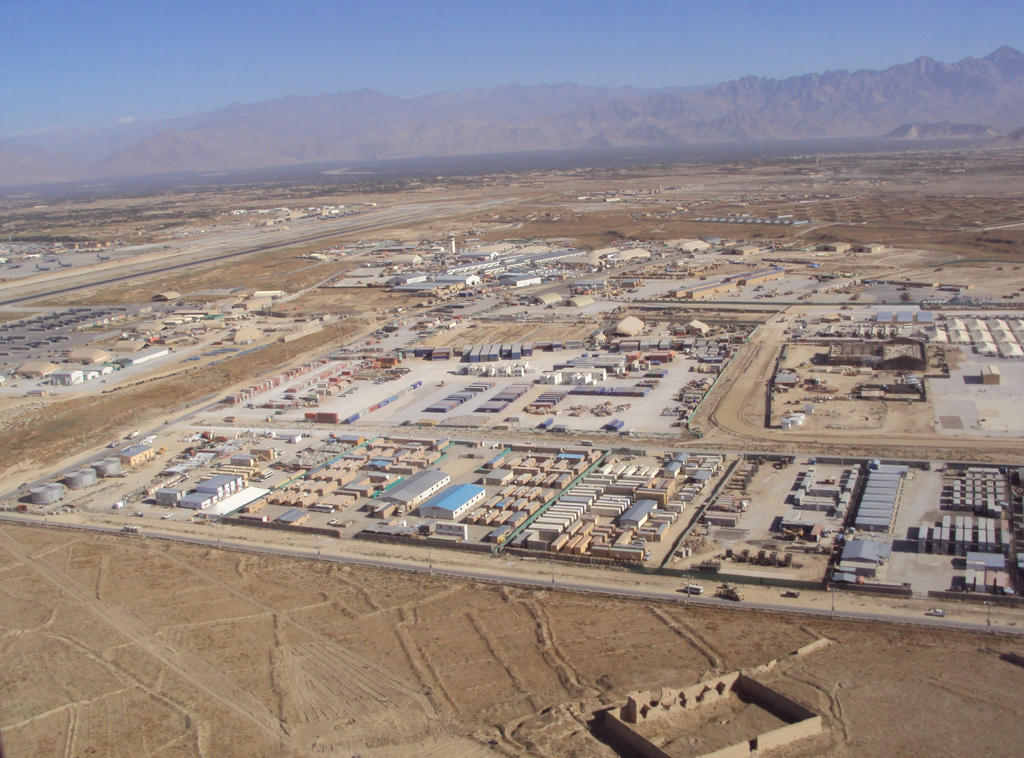
The Counter-insurgency efforts (COIN) were based on lessons from both the war in Vietnam and Iraq. The model described a multi-pronged approach to COIN that built trust with the local population and provided direct assistance in the form of infrastructure improvements, diplomatic outreach, and other forms of engagement aside from direct military action. Across Afghanistan, the US and NATO engaged in building new power plants, electrical infrastructure improvements, communications infrastructure improvements, building schools, and other similar projects.
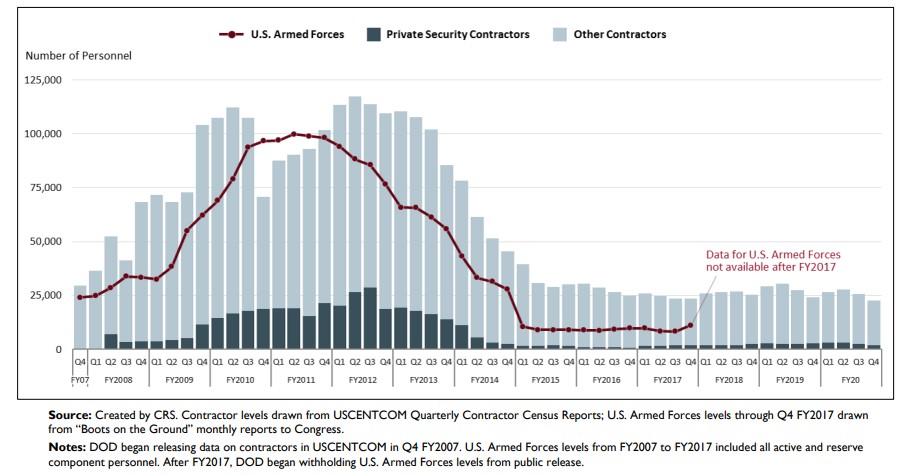
Beginning in 2009, NATO and UN forces began cutting back on troop commitments to the war effort in Afghanistan. Troop levels dropped slowly at first, and by 2014 there were still around 160,000 coalition and US troops in the country. By the end of 2014, troop levels dropped precipitously to around 100,000 as support for the ongoing war dimmed and NATO countries exited the conflict. The US leadership knew that the long-term solution for Afghanistan involved local control over security and accelerated the training of local forces to take over security commitments across the country. Both the Afghan National Army (ANA) and Afghan National Police (ANP) received increased amounts of training, equipment, vehicles, aircraft, helicopters, supplies, and weapons from the US. The US pushed the ANA to take on a more direct role in operations against insurgent forces. The Afghan forces sometimes took the lead, but most efforts continued to rely heavily on US leadership, and especially air power.
All wars are logistics exercises. As Napolean once famously quipped, “The army marches on its stomach.” What Napolean, like all great generals both before and after him realized is that the effectiveness of any army is dependent upon the ability to resupply the force. Ancient armies pillaged and plundered as much for food and clothing as for gold and treasure. More modern armies “lived off the land,” and their movements constrained by the ability to gather food or supplies. In 1863, Lee’s army famously entered the town of Gettysburg in search of shoes. Grant’s victory at Vicksburg was critical for severing the Confederate supply routes via the Mississippi River. Sherman’s march to the sea was as much about feeding his own troops as it was to cut the Confederate forces off from their food sources. During World War II, the US created the “Red Ball Express,” a logistical resupply effort to move supplies rapidly from the English Channel to the front line in France, Germany, and the Netherlands that was critical to final victory. General George Patton once observed that “Amateurs worry over tactics, professionals concern themselves with logistics.”
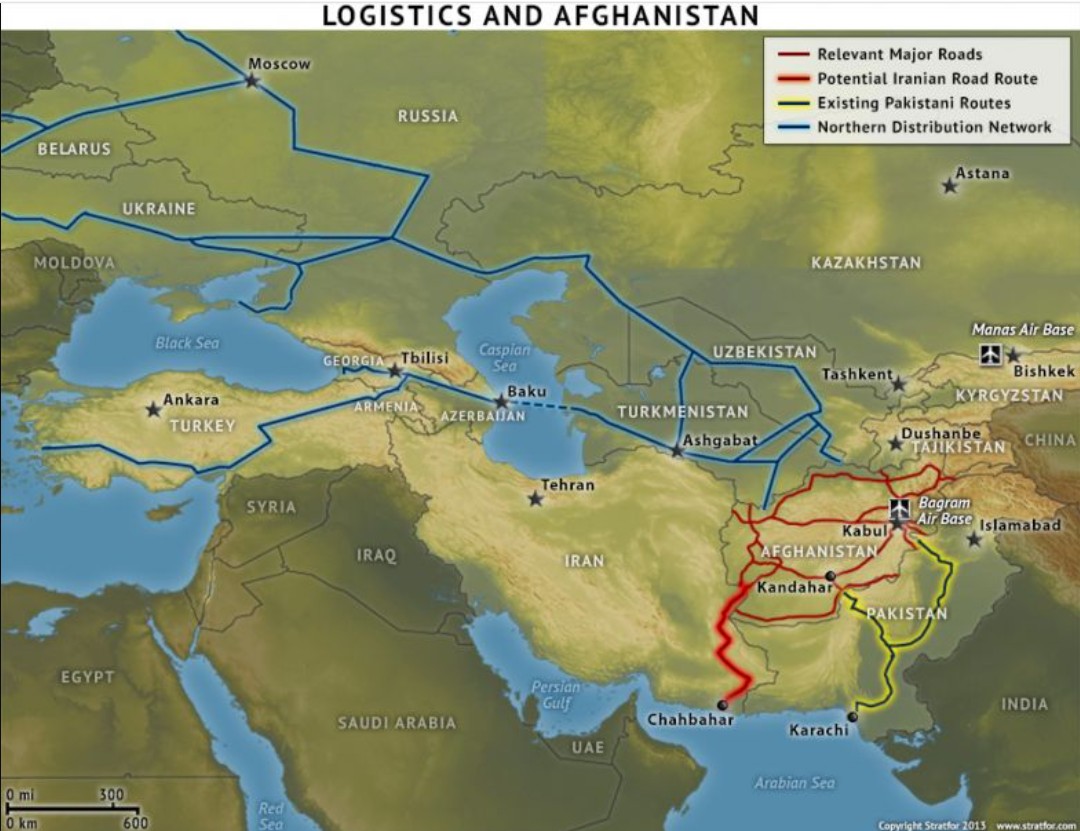
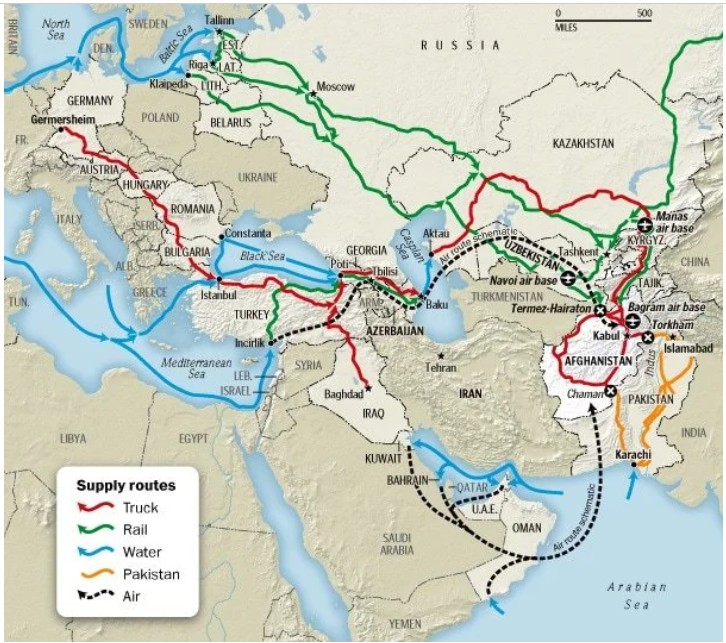
US force levels in Afghanistan were limited at the outset because of the logistics of resupply. As a landlocked country, supplies had to come through either through Pakistan, which initially allowed use of the port facilities and airfields, or through Uzbekistan and other countries in the north. Both routes were long, complex, time and resource consuming, and fraught with both diplomatic and financial concerns. Political instability in Pakistan, and their own inability to effectively control the northern tribal region, impacted their ability to provide support. By 2017, much of the support from Pakistan came covertly, or through means that enabled their leaders to maintain plausible deniability concerning US operations.
No other country aside from the US could have undertaken the Afghan war or prosecuted it for so long. The logistical and diplomatic efforts required to support over 500 locations and 140,000 troops in a friendly or permissive environment with adequate seaport and airport facilities is enormous. When the environment, like Afghanistan, is neither friendly nor easily accessible, the problem of resupply is exponentially more complicated. Massive diplomatic and contractual negotiation efforts resolved disputes, established linkages, and enabled resupply. Planning estimates during peak surge operations allowed for a logistics chain of ten to twelve people to support each front-line soldier on patrol, or approximately two million people required to support ongoing combat operations.
The troops were not the only people committed to supporting operations. Civilian contractors also supported each installation, support base, camp, and outpost. Contracted companies such as Fluor and DynCorp managed billions of dollars in logistical contracts that provided construction, electricity generation, communications and internet, maintenance, base and personnel security, refueling, air support (transport), vehicles, and dining facilities. According to a Congressional Research Service document published in 2021, the number of contractors in Afghanistan peaked in 2012, at over 117,000 people. Across Afghanistan (and Iraq) Logistics contracts managed by companies authorized under the Logistics Civil Augmentation Program (LOGCAP) received billions of dollars to support to the war effort.
The mere fact that the US was able to sustain the level of logistical commitment throughout the conflict makes the debacle of the final withdrawal in August 2021 far more confusing, confounding, frustrating, and maddening. For years, force levels were being reduced, and both the outgoing Administration and the incoming Administration seemed committed to ending the conflict and removing US forces from the country. There were pushbacks by military and national security advisors who wanted to leave at least a small number of US forces on the ground, or to hold key installations such as Bagram airbase beyond the final withdrawal. However, by May 2021, the President made the final decision to remove all forces. The military, believing a rapid departure would be safer in the wake of renewed Taliban attacks, determined to exit the country within sixty days of the final order. Planners focused on the mantra “speed is safety,” at the expense of all other considerations.
As the US forces drew down and the US closed installations across the country, Taliban forces immediately moved to take over those installations. Despite years of US training and support, Afghan forces, like the ANA and ANP, were unable to assert any dominance and resistance quickly faded. Despite the security and logistical advantages offered by Bagram airbase, US forces abandoned the facilities overnight and without notice to loyal Afghan forces on July 1, 2021. Taliban forces took over the installation and released dozens of known terrorist prisoners held in the detention cells on the base. Final exit operations moved to the international airport at Kabul, where the US, in an inconceivable departure, depended upon the Taliban for external security.
The speed of the US departure and subsequent Taliban resurgence created enormous problems for loyal Afghans who had supported US operations during the war. Tens of thousands of Afghan civilians were employed as translators, guards, contractors, or otherwise supported the US and NATO forces. All those people and their families were in jeopardy with the resurgent extremist government of the Taliban. As the US consolidated operations in Kabul, tens of thousands of Afghan refugees flooded the area, desperately seeking to escape.
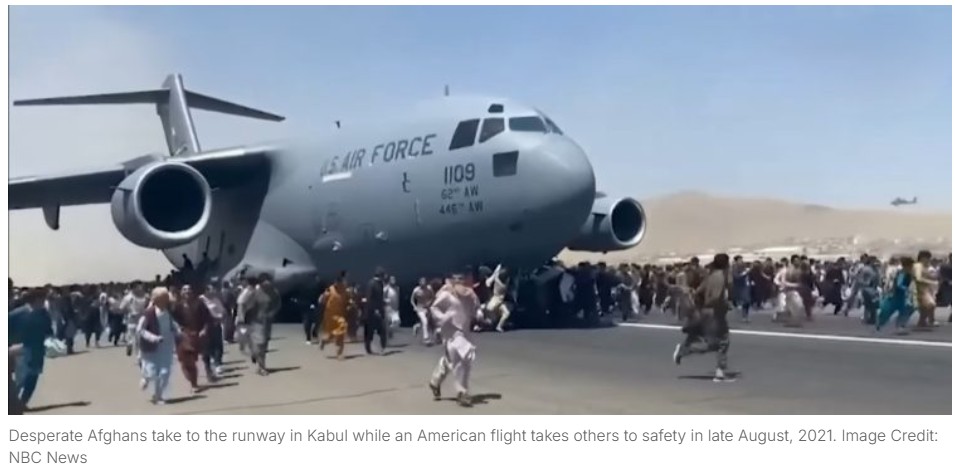
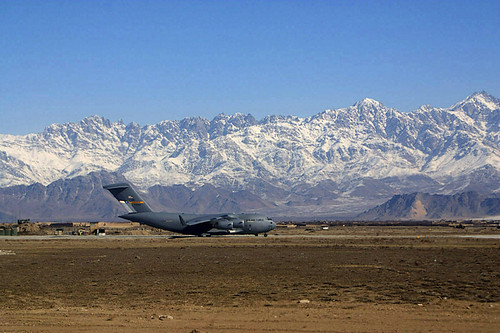
The refugee problem became a tidal wave that most observers and those who had served on the ground in Afghanistan predicted would come. Neither the US military planners nor the Department of State appeared to have considered the possibility. The State Department made no arrangements with friendly countries to receive, process, vet, and accept Afghan refugees. Neither the military nor State Department established facilities at border crossings, nor at US bases in the region, for a similar purpose. Despite the massive logistical support capabilities demonstrated over the preceding twenty years, no thought or effort appeared to have gone into planning for the withdrawal beyond getting US military personnel out of the country. The scene in Kabul deteriorated quickly, with refugees scrambling to hold onto the landing gear of Air Force transport aircraft, and a crush of bodies at the entrance, known as Abbey Gate. Likewise, the US scrambled to set up camps at Doha and other US and friendly air bases.
The inability to manage the complex logistical problem of the final withdrawal is confounding and infuriating. The US, under the LOGCAP contract, had more than enough capability to establish base camps, logistics camps (LOGCAMPS), medical and administrative facilities, and temporary housing for hundreds of thousands of people as demonstrated for the previous twenty years in Afghanistan. The State Department should have negotiated agreements with friendly countries in the region prior to the departure, and aided the reception, processing, and final transportation of refugees. The Pentagon and State Department knew for years that withdrawal was imminent, and yet there appeared to be no effective planning or management of the operation when the time came.
The full and final analysis of the debacle in Kabul would require volumes. Suffice it to say that the exit from Kabul, like the exit from Saigon in 1975, was embarrassing for the US and both validating and empowering for our enemies. It was demoralizing, dispiriting, and sickening to those of us who served there. Worse, in the aftermath of the departure, thirteen servicemembers and 169 Afghan civilians died when a suicide bomber, released from a Bagram prison, detonated himself at Abbey Gate.
As distressing as the departure was to watch unfold, it was even more maddening to see that none of the senior leaders in either the military or Administration was held accountable. The only ones who paid the price were the 182 dead at Abbey Gate. No senior officer or administration official was relieved, reprimanded, demoted, or replaced in the aftermath of the catastrophic failure. The leadership from the very top down demonstrated how little they valued the service of the millions of men and women who put their lives on the line. A junior soldier would have done a better job of planning the exit.
In the final analysis, Patton was correct. Only amateurs planned and executed the withdrawal from Afghanistan. The troops and Afghans paid the price for their folly.
CURRENT OPERATIONS UPDATE:
The latest revision to Killer’s Reign is complete. The manuscript continues to evolve and improve, and I am excited to get this story out to readers this year! Meanwhile, I also continue to work on the rewrite of my novel and screenplay, Sleeper Cell.
I am also working on my next novel, Tommy’s War, based on the true story of a British Commando operating behind the lines in WWII. I am deep into research, and the biggest issue now is that there are so many excellent and thrilling stories that I must choose which to tell.
COMMUNICATIONS UPDATE:
There is never any shortage of story ideas: intrigue, action, and potential story lines populate every news cycle. Current conflicts around the globe, in Iran, Ukraine, Israel, and Africa are rife with stories waiting for a voice. Although I write works of fiction, I strive to ensure that the events and characters are plausible and representative of real word events and scenarios.
The Success Playbook, the fifth in the series and the second volume that I have contributed to, is now available on Amazon. Signed versions of paperback and hardcover versions are for order by contacting me through my website. The book includes chapters from business leaders and coaches and quickly became the #1 new release and #1 in Business Education. This book joins the previous release, The Coach’s Playbook, which also achieved best seller status in July 2025.
Check my website regularly for more information about my books and stories, updates on current events, links to other works, and interesting tidbits of intelligence.
https://gregsmithonline.com/
www.linkedin.com/in/gregmsmith17
Stay Alert. Stay Informed. Stay Aware.