Memorandum
Subject: Remembering Pearl Harbor
To: All Readers and Interested Parties
From: Greg Smith, Author
Date: 7 December 2025
BACKGROUND:
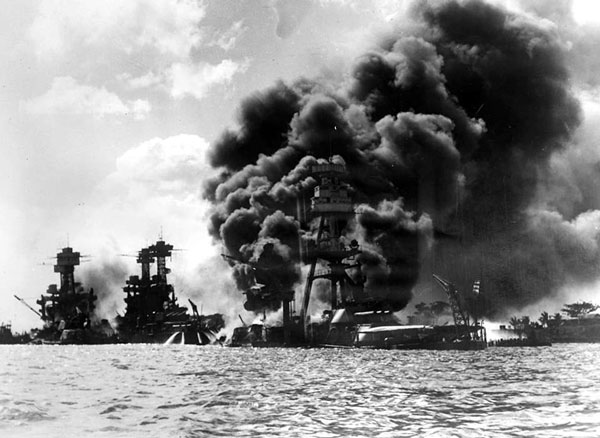
On Sunday morning, December 7, 1941, the first bombs fell on Pearl Harbor just before 8 o’clock. In the first wave of the attack, 183 planes swarmed the unsuspecting base, home of the US Pacific Fleet. At 8:10, a 1,700lb armor-piercing bomb penetrated the deck of the USS Arizona, detonating the forward ammunition magazine. The mighty battleship sank into the mud, taking over 1,000 sailors with her. The attack came in two waves, totaling over 350 aircraft and cost the lives of 2400 Americans.

The attack on Pearl Harbor should not have come as a surprise. The US embargoes and restrictions on trade with Japan starting in 1938 severely restricted the Empire’s ability to wage war in Asia. Tensions in the Pacific between the powers escalated dramatically. In 1940, President Roosevelt had the Navy relocate the Pacific Fleet from San Diego to the new headquarters at Pearl Harbor as a show of strength and to act as a “restraining influence” on Japanese expansion. The idea of Japan attacking Pearl Harbor was unthinkable.


Complacency and willful blindness stalled, delayed, and impeded proper preparations. Despite being placed on a “war footing,” both Admiral Kimmel, Commander of the Pacific Fleet, and General Short, Commander of the Hawaiian Department of the Army, failed to take the necessary precautions. Their hesitation stemmed in part from the vague or confusing communiques from their leadership. The Navy remained in port, and the Army moved their aircraft close together on the airfields to prevent sabotage. Both moves resulted in easy targets for Japanese pilots.
The fact the no US leaders considered a strike against Pearl Harbor possible reflects poorly on the leadership. Just one year earlier, in November 1940, the British launched a successful air attack on the port of Taranto in Italy, disabling most of the Italian Mediterranean fleet. American admirals assumed the distance from Japan and shallow depth of Pearl Harbor would preclude any such strike. The Japanese studied the raid on Taranto and developed new aerial torpedoes that could be used in the shallow depths of Pearl Harbor.

Both the Navy and the Army had long dismissed the airplane as mere toy. Naval aviation began to take root in 1910, when Eugene Ely successfully flew a biplane aircraft from the deck of the USS Birmingham. One year later, he also successfully landed on the USS Pennsylvania. By 1918, the British had launched the HMS Argus, the first ever wholly designated aircraft carrier. The US converted the USS Langley from a collier into an aircraft carrier in 1922. Still, the Navy leaders, trained in the era of dreadnought battleships, were slow to adapt and willfully blind to the new realities.
In 1921, Brigadier General Billy Mitchell argued that the airplane would make surface ships obsolete. He was scoffed at, scolded, and mocked roundly in military circles. Mitchell persisted, demonstrating that an airplane could sink a capital ship by sinking the captured German battleship Ostfriesland. Mitchell later predicted, in 1924, that an attack on Pearl Harbor from the air by Japan was not only possible, but likely. Mitchell presciently claimed that the attack would be on a Sunday, and at 7:30 in the morning. Still, even he could not conceive of an aircraft carrier as a weapon and thought long-range bombers from other islands would be used.

The attack on Pearl Harbor thrust the US into World War II. The entire nation committed resources, manufacturing, and people in the greatest mobilization ever conceived. The might of the American manufacturing sector ramped up, civilian production ceased, and factories that once turned-out typewriters now produced guns. Factories that made cars soon produced bombers at the rate of one every hour, seven days per week. US ship building produced “Liberty ships,” to transport cargo at the rate of one every eight hours.
Prior to the attack on Pearl Harbor, Admiral Isoroku Yamamoto told his leaders that his forces would run rampant across the Pacific for six months after the initial raid. Following the attack, Yamamoto observed “I fear that all we have done is to awaken a sleeping giant and fill him with a terrible resolve.” Yamamoto was correct on both statements. In an act of retribution, Army fighters with advanced knowledge of his movements ambushed and shot down Yamamoto over Bougainville in 1943.
INTELLIGENCE ASSESSMENTS:
World War II lasted for over six years, from 1939-45. Though the US was not actively engaged until the attack on Pearl Harbor, the US was providing material support to Britain and the USSR through lend-lease programs. American ships also escorted Atlantic convoys operating between Halifax and Iceland, along the eastern coast, and in the Caribbean. Despite this involvement, an active isolationist movement led to reluctance to expand US involvement.
The isolationist spirit also affected military leaders. Although most were aware that war with Japan and US involvement in Europe was likely, they spent relatively little time studying the lessons of either the ongoing conflict or WWI. Once the US entered the war, the lessons already learned in Europe, such as blackouts and maritime convoys, had to be re-learned. In 1942, German submarines ranged along the US coast in what the skippers called “the happy time,” or the “American shooting season.” Ships were silhouetted against the bright lights of coastal cities, making for easy targets. Between January and August 1942, U-boats sank over 600 ships.
Willful blindness is often accompanied by arrogance, ego, and a sense of superiority. In a stunning lack of action following the debacle at Pearl Harbor, Douglas MacArthur failed to take actions to protect the forces in the Philippines. Within hours of the Pearl Harbor strike, the Japanese struck at the Philippines. Half of the Far East Air Force aircraft were destroyed in the first forty-five minutes. By January, MacArthur was forced to withdraw his forces to the Bataan Peninsula. He established his headquarters on the nearby island of Corregidor at the mouth of Manila Bay. MacArthur was evacuated via PT boat by order of President Roosevelt on March 11, 1942. Bataan surrendered on April 9. Those on Corregidor held out until May 6, 1942. The nearly 70,000 starving American and Filipino troops were forced to march some 66 miles to a prison camp. Along the way, approximately 3,000 died in what came to be known as the Bataan Death March.


When US forces finally made their first assault landing in North Africa, they once again failed to heed wise counsel. In the first engagements against the German Afrika Korps at Kasserine Pass in 1943, US forces were pushed back some 50 miles. The Allies lost over 10,000 troops, including some 6500 Americans. The defeat led to a complete restructuring of US command structure, tactics, and highlighted the need for new equipment.
When the US invaded Iraq in 2003, US forces moved rapidly to take Baghdad. US leaders recalled the lessons of the first Gulf War, and relied on speed, mobility, and overwhelming force to crush the opposition. Once the initial phase ended, political leaders, without consideration of the culture, the conditions on the ground, or considering the lessons of previous conflicts, including the Iran-Iraq war and Vietnam, stepped in with misguided edicts and mandates. The result was a sharp increase in insurgent operations and guerrilla warfare. US and coalition troops paid the price in blood. The wave of attacks also highlighted deficiencies in equipment, which eventually led to mine resistant vehicles, new armor, and new tactics.
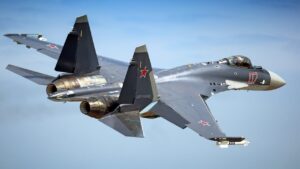
In 2022, Russia invaded Ukraine, setting off a conflict that continues to rage. The war in Ukraine has evolved to include massive drone strikes, covert insurgency operations, and missile strikes by both sides. The United Nations High Commissioner for Human Rights estimates that as many at least 14,534 civilians have died since the invasion began, though the UN also states that the actual number may be more than 53,000 civilian casualties. Estimates of military casualties vary even more widely. By some accounts, there are up to 100,000 Ukrainian and 300,000 Russian casualties in the conflict
In 2023, Hamas attacked Israel using paragliders and suicide attackers. That conflict devolved into insurgency operations, combined with air strikes, and subterranean warfare in the extensive tunnel systems beneath Gaza City. In the Red Sea, the Houthis attacked and sank multiple commercial ships using drones, missiles, and small boats. The US and most western countries continue to scramble to adapt to the new forms of warfare.
Events around the globe highlight the changing face of war. Automated bots spread disinformation and foment chaos. Artificial Intelligence (AI) is being used to create “deep fakes” of political leaders and spread confusion. Server farms uncovered in New York and New Jersey were poised to overwhelm and cut off cellular communication to create instability and instill fear. Both nation states and criminal gangs extort or steal funds from bank accounts to fund nefarious acts. Cartels and others flood the cities and streets with illicit drugs and weapons. Massive immigration in both the US and Europe strains social systems and political systems. All these factors, taken individually, are enough to shake a society. When combined, especially if controlled or influenced by a nation-state actor, they can lead to the collapse of society, and possibly even war.
Are any of our political or military leaders paying attention?
CURRENT OPERATIONS UPDATE:
I am deep in the current rewrite of Killer’s Reign, and it is coming together. Although I have plenty of work to do on this revision, I expect to complete the rewrite shortly. Meanwhile, I continue to work on the rewrite of Sleeper Cell. I am also doing research and developing the plot and story line for a World War II historical fiction thriller and associated screenplay.
COMMUNICATIONS UPDATE:
As we close the year, I thank all my readers, editors, fellow writers, friends, family, and colleagues. I sincerely hope that 2025 has been a good year for all, and that 2026 is even better!
My normal disclaimer still applies: my stories all draw on current events as well as my own experience. Although works of fiction, I strive to ensure that the events and characters are plausible and representative of real word events and scenarios.
Check my website regularly for more information about my books and stories, updates on current events, and interesting tidbits of intelligence.
Stay safe and Happy Holidays!